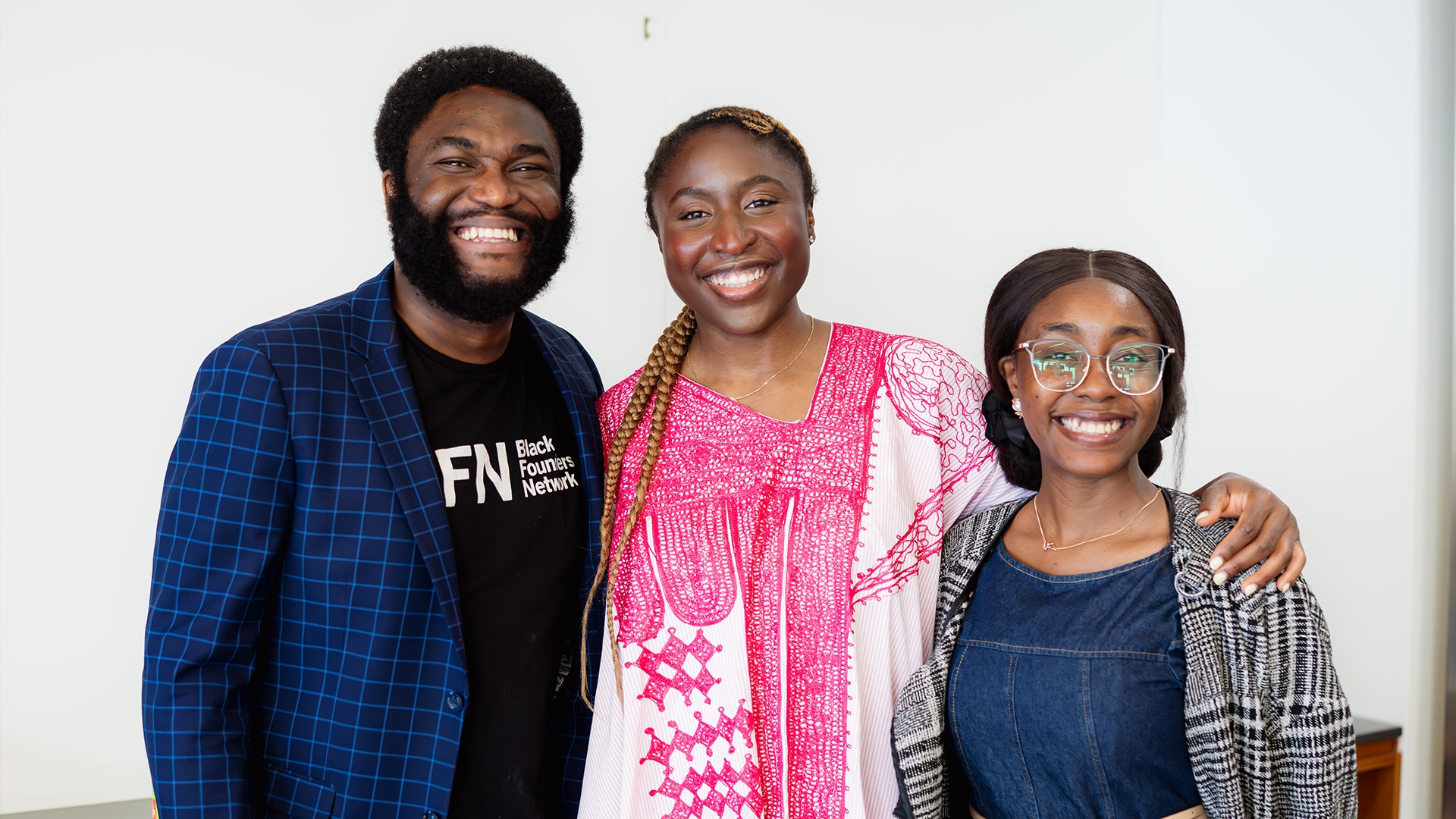
At the University of Toronto (U of T), a vision aims to support Black entrepreneurs nationwide.
Efosa KC Obano is an alumnus of the university who moved to Canada from Lagos, Nigeria, in 2013 to study strategic management.
He arrived in Canada when there were nearly 300,000 Africans in the country, a number, he said, that has grown to over 1.5 million. That motivated him to serve as director of marketing and external relations for the university’s African Students Association, supporting second- and third-generation immigrants.
Obano told AFROTECH™ that his upbringing shaped his decision to pursue entrepreneurship as it could be a “means of social change.” Having grown up without access to internet or 24/7 electricity, he saw how companies or entrepreneurs created such access for people.
He founded the African Impact Initiative in 2018, which funds and supports African entrepreneurs building in Canada and across Africa. The University of Toronto invested in the organization. Obano also spent three and a half years at Dell Technologies, helping champion small businesses with Dell’s infrastructure and leading the social impact portfolio. His time there overlapped with the period following George Floyd’s death in 2020.
“Every organization is like trying to think, ‘OK, what can we do better to support Black entrepreneurs or Black people in general?’ Because U of T supported me with my first organization, the African Impact Initiative, I was one of the few Black founders at the time that they had supported with anything sort of financial,” he told AFROTECH™. “So, they had reached out to ask, ‘What can we do to help Black entrepreneurs here?’ My other organization at the time had blown up, lots of awards, lots of recognition, etc., but that was in Africa. And they were the sponsors, so they were seeing all that success and they were like, ‘Is there a community of folks here that are also building that we can support?'”
Black Founders Network
Obano spent the year speaking with as many Black entrepreneurs in Canada as possible to learn about the barriers they faced. To his surprise, the biggest barrier wasn’t capital, it was community. People wanted to build around those who understood their lived experience.
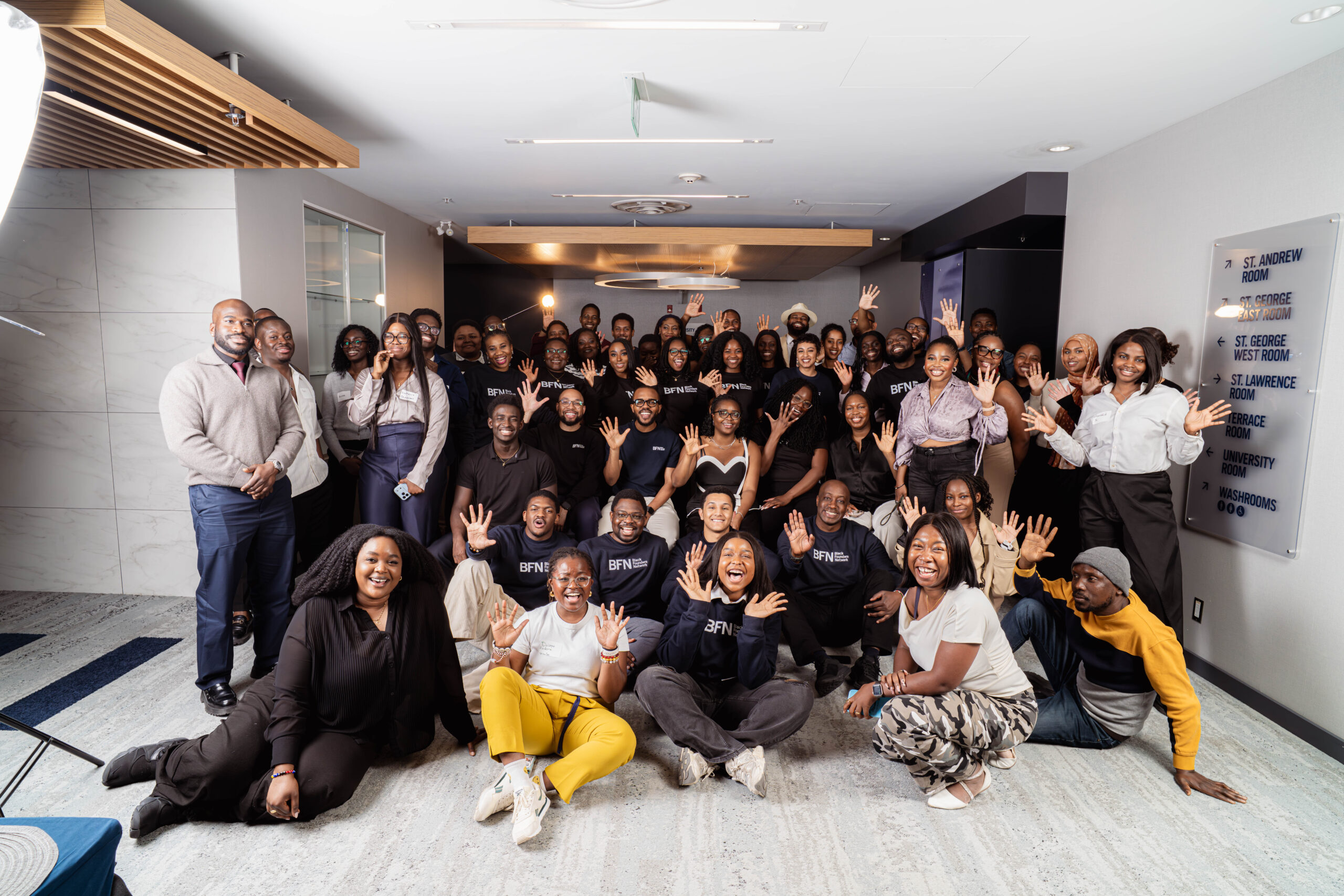
That year, Obano received his permanent residency and took a pay cut from his senior salaried role at Dell Technologies to make an impact beyond financial wealth. In October 2021, the Black Founders Network (BFN) launched. It is an inclusive community for Black founders at all stages, with support, networks, resources, and the capacity to scale.
BFN provides access to capital across three key stages, beginning with Core, which helps aspiring entrepreneurs through introductory sessions on ideation, startup development, and team building. Participants also receive monthly office hours, co-working space at U of T’s Schwartz Reisman Innovation Campus, and a chance to win $4,000 CAD through the Smart Start Awards to develop their MVP (minimal viable product), according to the website.
At the Accelerate stage, founders have built their MVP. They may have some early revenue and a waitlist. BFN supports them in boosting users and revenue by providing up to $25,000 in funding grants, along with cohort-based programming, Obana said. They can also build alongside the best founders through its alum base.
Founders earning at least $250,000 in annual revenue qualify for the next stage, Scale, and will receive help raising seed rounds and, in some cases, Series A rounds. They also can receive $50,000 and more in grants. Obano said Scale will help them expand into new markets.
BFN further offers a career advancement program that trains and connects the BFN network’s best-performing talent with companies that want to hire them. He noted that sometimes founders in his program realize they would rather work for someone else than build their own companies. BFN awards grants to companies to hire from this talent pool.
Additionally, the BE Her program addresses the unique challenges Black women entrepreneurs face.
Over the past five years, BFN’s programming has served more than 15,000 people. Success stories include OneCliq, an AI-powered culture-context insights engine co-founded by siblings Nathan Knight and Tanika McLeod, which Dig Insights acquired in July 2025.
Knight and McLeod now mentor for BFN’s programs and have also invested in some of its companies.
BFN has more than $200 million in financial value, and Obano said this reflects its companies’ revenues and the funds they’ve raised.
Looking ahead, he added that a Black Founders Fund is in the works to create more funding pathways, and he is in talks with well-resourced, credible universities to replicate the work they have done with the University of Toronto.