Since its inception in 1980, BET has long served as the place for Black entertainment television, and today, while its original model has evolved, that sentiment remains the same.
Founded by Robert L. Johnson, BET launched in July 1983 as a two-hour weekly block on the USA Network before evolving into the 24-hour cable channel it’s known as today.
“The thing that has kept us stable is the love, the relationship, the relevance that our consumers have for the brand,” current BET President Louis Carr, who is speaking at the upcoming AFROTECH™ Conference 2026, told AFROTECH™ Culture in a recent interview. “Through all the changes and rough waters and seas, our community still wants us to win, and they want us to win in a big way, so I think our employees understand that. So, every day they come to work trying to do the best job they can to serve this amazing audience. Everybody loves us, and everybody wants us to win, and that is what has kept us going thus far.”
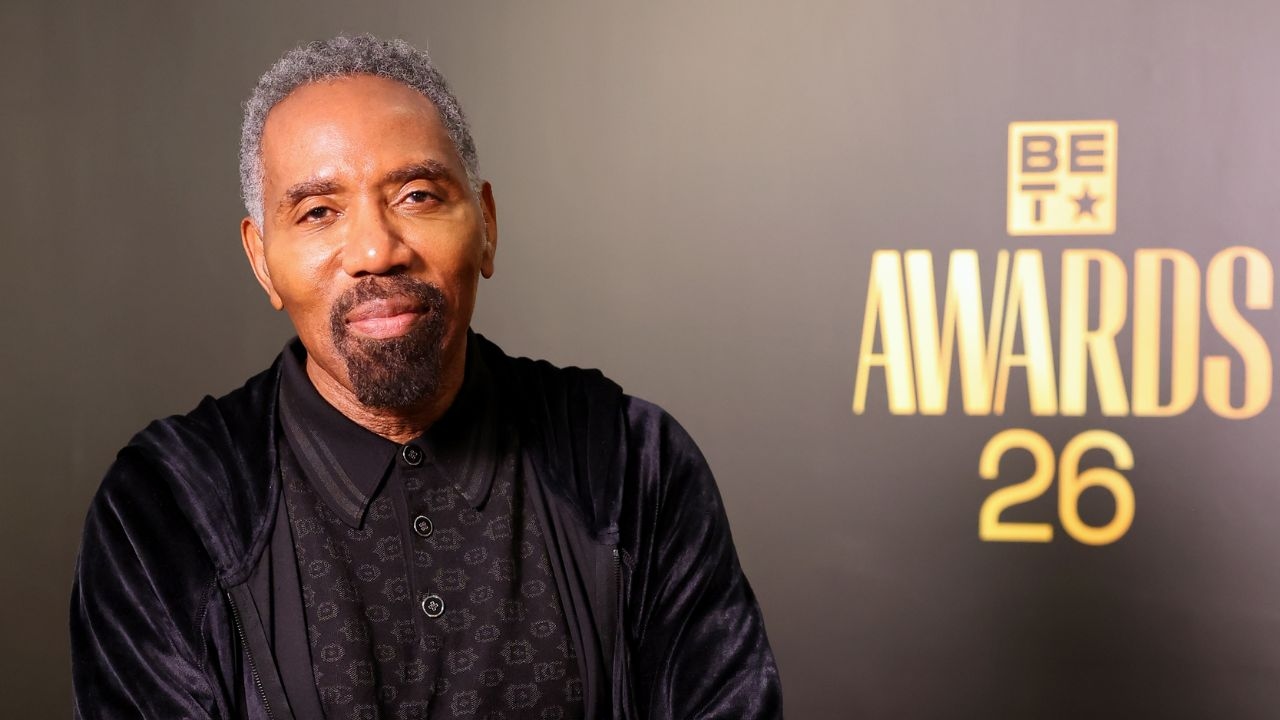
Carr assumed the role of the network’s president in December 2025 after nearly four decades at BET. Previously, he helped to drive more than $10 billion in advertising revenue at the company. Today, he leads the network’s efforts around reinvention, access and impact.
What that vantage point taught him about the value of the network
“My previous role sort of gave me the experience of educating people about the value of Black people and the Black community,” Carr recalled. “People just call it media sales or whatever; I said what I do is educate people on the value and the contributions that Black people make to our society, what Black people make for business, what Black people contribute to politics. I’ve always been in sort of that educational mode, because what I know is that our community, our people, have been major contributors to everything in this country, and we’ve been a part of that.”
He added, “We have not always been recognized for our contributions. We have not always been valued for the things we do. So whether we’re talking about detergent, cosmetics, or whatever the case may be. That experience sort of gave me this sort of education on what needed to be done to convince people of the value that Black people have. Now, what I’m trying to do is give creators and those in our community also that access to this brand as we move forward.”
Embracing the current media shift
According to Deloitte, the content creator economy has quickly become a global phenomenon with an estimated 50 million creators generating content for five billion social media users worldwide.
Creators like Druski, who rose to fame through viral social media sketches, recently became the youngest host of the BET Awards at age 31 thanks to his work at this year’s show in June. He surpassed Kevin Hart, who previously held the record when he hosted the awards show in 2011.
During our conversation with Carr, we likened the creator economy to what it was like in church when Kirk Franklin first stepped on the scene, and many elders were not keen on his approach to gospel music.
Today, Franklin is responsible for redefining the genre as a whole.
“Since you brought up church, I’m gonna take you to a little scripture,” said Carr. “‘Old men dream dreams, and young men see visions.’ And what that really means is that you have to work together. Young men have to work with old men, old men have to work with young men, and what we’re looking at is how do we bring all the community together, because the ideas that Druski had, we embraced most of those ideas, but we also had him embrace sort of the structure and the process and the things that we have to go through from a business standpoint. It worked well.”
“We want more relationships like that, as most people would tell you, is that I think I’m about 25 years old anyway, so you know, all them old heads, I ain’t trying to mess with. I’m trying to [work with the younger generation],” he continued. “I’m always in that space that both are needed in order to be successful in today’s world.”
Making this a communal experience across all generations
Amid industry consolidation and the network’s ongoing reinvention as it adapts across television, streaming, digital, social, creator-led formats and live experiences, Carr holds firm that the platform still intends to reach Black people everywhere, across many generations.
“I think you root yourself in community and culture,” he explained. “If you do that, and every single day you’re trying to strive for those who you know that you depend on, and we depend on our culture, we depend on our community, and we depend on our partners. So, you try to bring them all together consistently, and that’s the intentionality that we’re trying to bring our partners in connection with our consumers and our community every single day, 24 hours a day.”