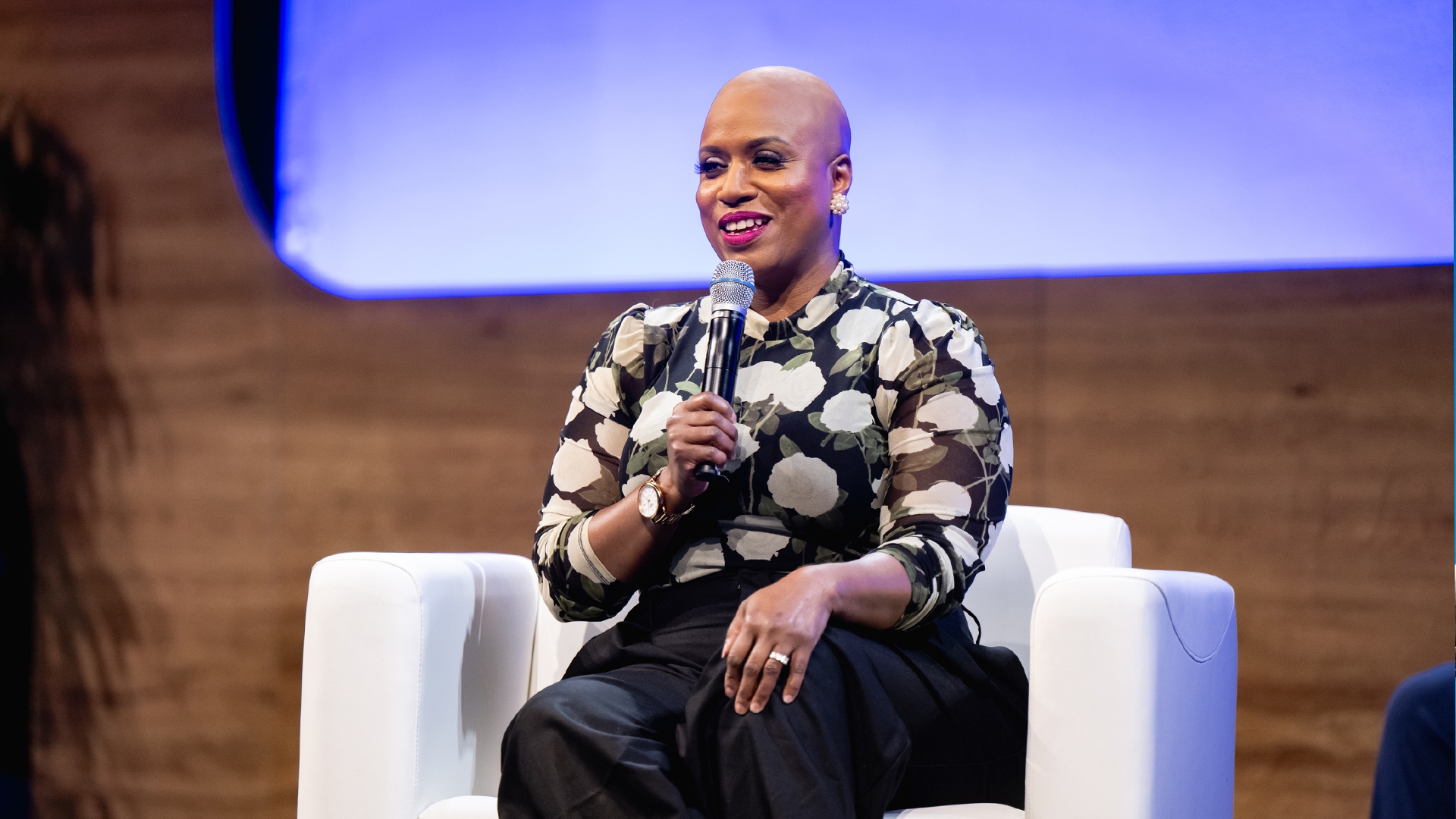
Democratic Rep. Ayanna Pressley believes the people most affected by a lack of policy should be the ones best positioned to change it.
Pressley represents Massachusetts’ 7th Congressional District and serves on the Financial Services Committee, which covers issues ranging from Wall Street to housing affordability and cryptocurrency, as well as the Oversight and Government Reform Committee, where she leads reparations efforts as the lead sponsor of H.R. 40. At the 2026 AFROTECH™ Conference, Pressley began by acknowledging the significance of gathering with visionaries working to shape a better future in the wake of the midterm elections. She reminded attendees that “we have always been the defenders of democracy.”
“A decade, what an incredible achievement and milestone, and on the heels of the election, it feels especially good to be here after Black people did what we always do. We have been the defenders of democracy. … We’ve always been the architects of revolution, of progress. And so to be in this room of tech entrepreneurs and innovators and experts, it just feels so good,” she said on the main stage.
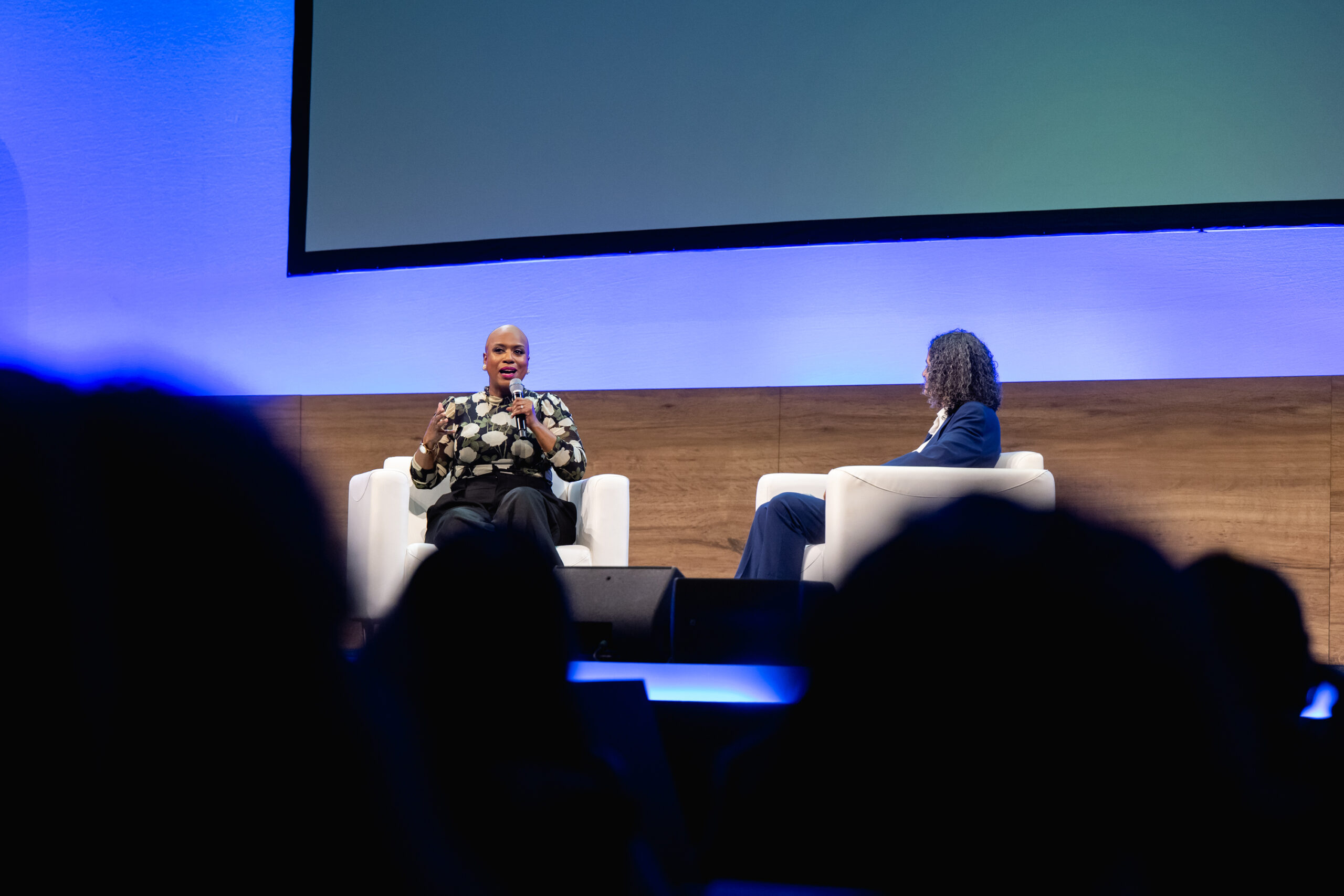
Pressley also shared some context about Massachusetts’ 7th Congressional District, the area she represents. It is home to Massachusetts Institute of Technology (MIT), and Google and Microsoft also have offices in the district. She said the area is seeing the “rapid development and deployment of AI” reflected in how deeply the technology is becoming embedded in people’s everyday lives, from phones to hospitals and classrooms.
On policy, Pressley said humans should also be at the center.
“The Blackest part of my district … life expectancy in that 3-mile radius … it’s a 23-year difference. From Cambridge to Roxbury,” she said. “In median household income, the disparity is about $50,000. So 23-year life expectancy, $50,000. Those sobering statistics, I anchor that in every bill that I author, in every policy decision that I’m considering. The best advice that I received as a freshman member of Congress in 2018 is in the process of legislating and governing to never lose the plot. The plot is the people.”
She continued, “When I think about AI and those disparities, I want to make sure that nothing is happening that is compounding those disparities … I care about AI being human first.”
Pressley, alongside Democratic Rep. Yvette D. Clarke of New York and others, wrote the AI Civil Rights Act, which bars companies from using biased algorithms and establishes stricter transparency requirements. To explain why the bill matters, Pressley pointed to the “so-called Department of Government Efficiency,” which “took a sledgehammer to our federal government workforce and infrastructure.” She said this disproportionately affected Black workers. She believes Treasury Secretary Scott Bessent and the federal government need to recognize that discrimination looks different today than it did in the 1950s.
“While all these Black workers have been displaced and are applying for jobs, most HR departments are using AI tools, and we have to make sure that they’re not biased and discriminating. So that is why we need the AI Civil Rights Act. Policy is my love language,” she said.
On data centers, she acknowledged that the discourse typically comes from a place of extraction, rather than looking at ways that are “additive and enhancing.” She called for more education and suggested an affirmative model that could be an example of reduced environmental impact. Noting how data centers can provide a service to communities when they move into their area, Pressley pointed to the technology of heat recapture, where data centers can take heat from their servers to heat homes and buildings nearby.
“That’s why we’re here, not only to double down on the problems, on the harm, but to cultivate and to harness the best solutions. That’s why I’m grateful to this room of innovators. I practice the ethos that the people closest to the pain should be the closest to the power, driving and informing the policymaking,” Pressley expressed.
She later added, “And I have been really heartened by the coalitions that have been building, people from every walk of life, urban and rural, around the issue of data centers. Wouldn’t it be something for them to mobilize around the best models for data centers?”
That’s why she emphasized education so community members can participate in solutions. Solutions, she said, will include greater representation in data development and deployment, and more care for transparency, ethics and governance in implementation and passing the AI Civil Rights Act.
“Make plain to your representatives that the AI Civil Rights Act is an imperative. Ask them to be a co-sponsor. I’ll take it from there,” she said.
View this post on Instagram