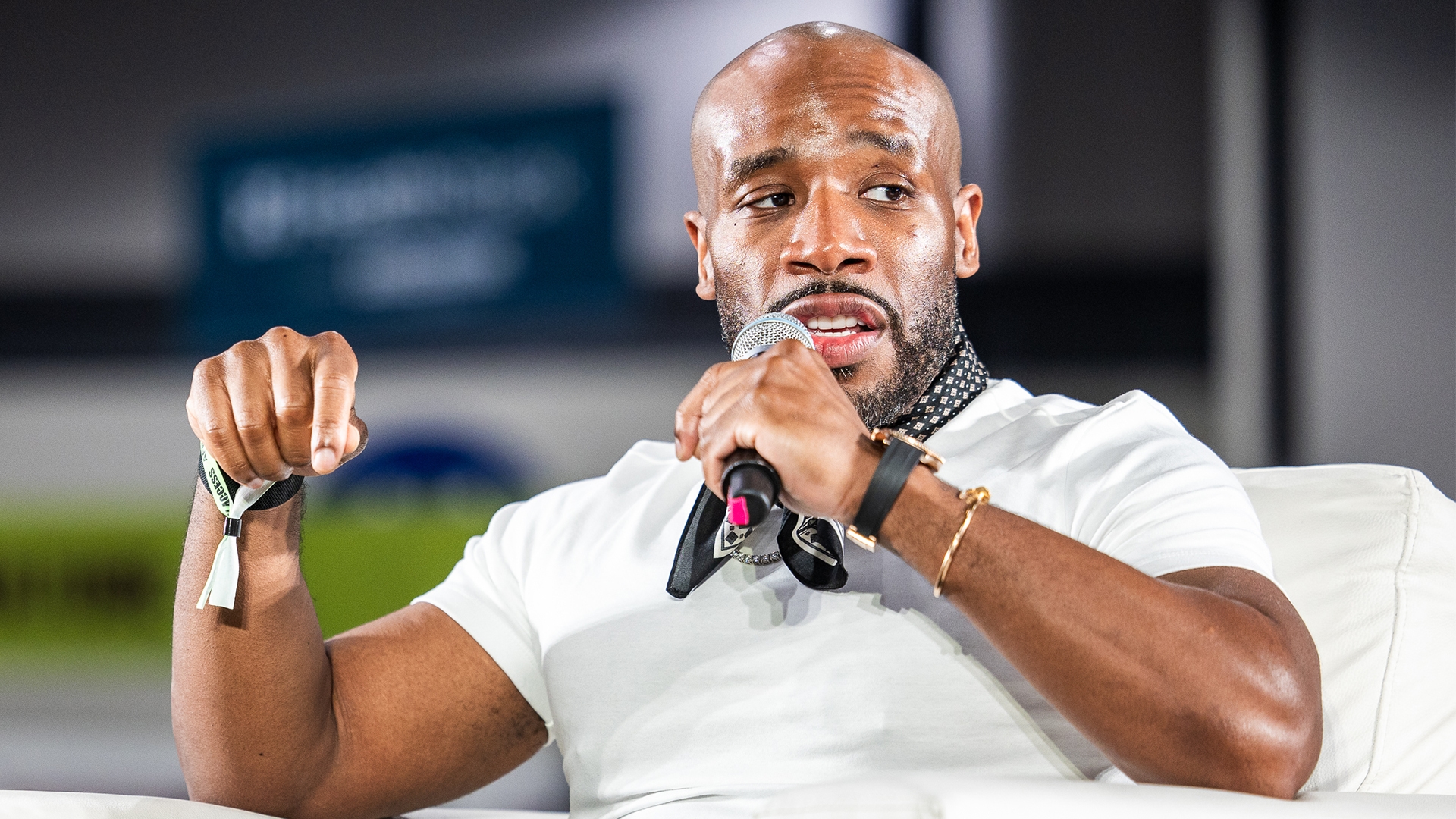
SQUIRE President Dave Salvant has advice for founders looking for funding.
Salvant left business school because he was convinced that “barbershops and salons are the linchpin of communities around this country.” This belief led him to co-found SQUIRE, a barbershop management platform. Salvant, a private banker, and Songe LaRon, an attorney, decided to purchase and operate a barbershop located in Manhattan, NY’s Chelsea Market “to learn about the nuances from the owner’s perspective,” he said while speaking at the 2026 AFROTECH™ Conference.
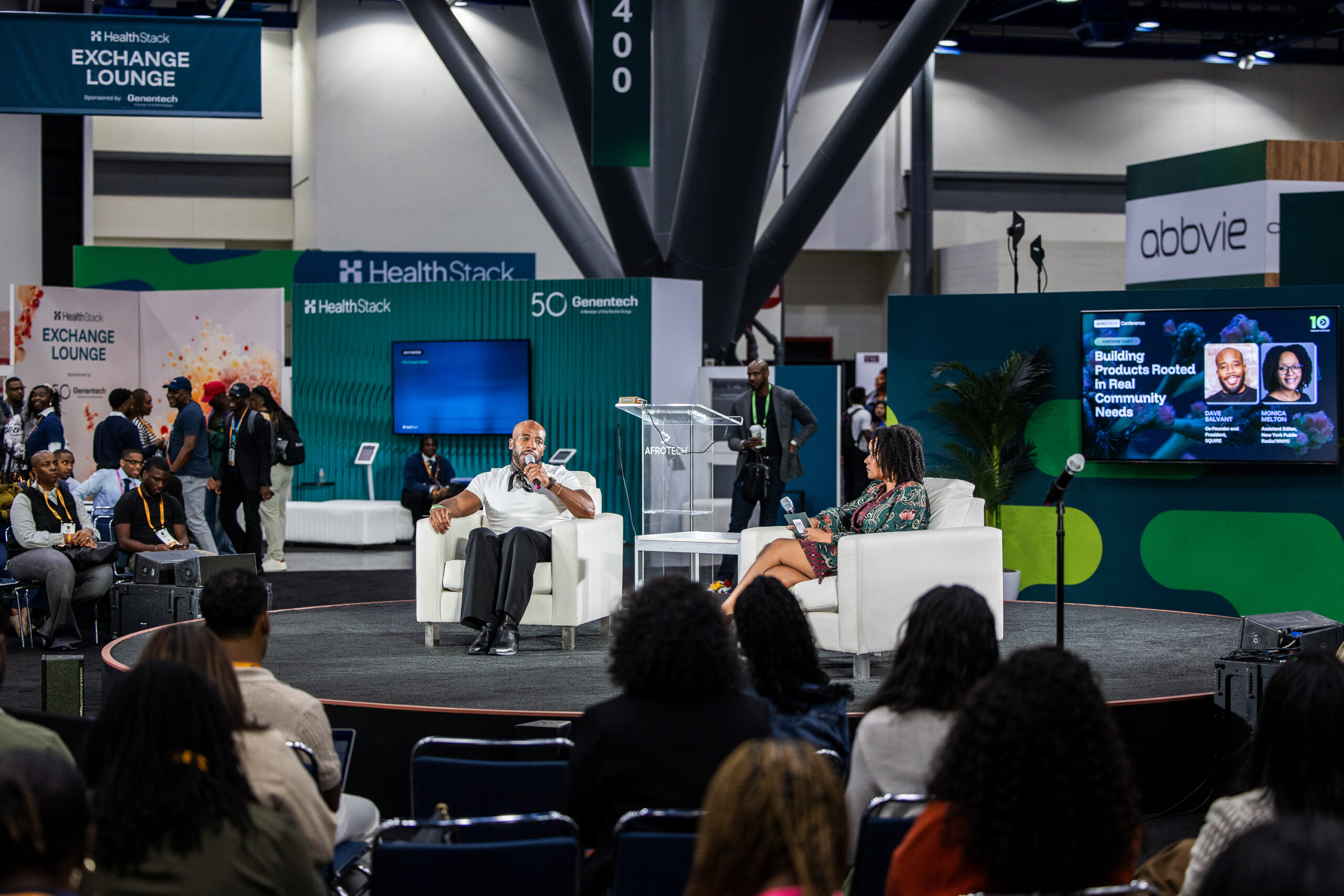
“There’s a phrase in Silicon Valley, in tech, more or less, ‘you have to eat your own dog food,’ and what that means is you really have to put yourself in the shoes of the owner and the customer and really walk that path,” Salvant said on stage with Monica Melton, assistant editor, New York Public Radio/WNYC. “The best founders and the best companies come from a place where they’re uniquely positioned to understand that market and thus have operational leverage in building a better product because they come from it, they experience the pain. So I and my co-founder experienced the pain of booking and getting a haircut. But the real unlock and the real opportunity was on the business side.”
SQUIRE is used by more than 3,000 barbershops and has 7.6 million clients who use the platform to book appointments, according to information on LinkedIn. The company is now valued at $750 million and has raised more than $165 million through its Series D funding round.
“We raised on May 19th, 2019, our Series A, and then, we raised in 18 months our A, B, C, and D … They were fighting to get in the deal. Once you have people competing for you, you can dictate the terms of the investment. So we’d have no liquidation preferences. And what a liquidation preference is, is the investors get paid back 1x, 1.5x, 2x before the founders or other employees get money in the exit, but we have none of that, so it’s extremely clean. We have tier 1 investors. So, we were fortunate that once we got the money in, we were able to take that money and just go,” he explained.
Salvant spoke Wednesday in the session “Building Products Rooted In Real Community Needs” at the AFROTECH™ Conference, which is celebrating its 10th anniversary in Houston. The conference runs through Friday, Nov. 6, and tickets are still available for the rest of the week.
Salvant was also candid about the not-so-glamorous moments that brought SQUIRE to where it is today. These included running out of money, being unable to make payroll, and going a month without paying salaries, all before raising its Series A.
He said there was plenty of rejection while raising funding. One investor even requested that they “hire non-Black executives.”
“That would never happen to a folk, a person, that was not Black,” Salvant said. “Imagine, imagine, a white guy raising money and they say, ‘Hey, can you hire non-white executives? That would not happen,” he said. “So, you hear stuff like that. … We got a lot of nos. … My co-founder went to Yale, a Yale lawyer. So, you hear that and you just have to have tough skin.”
Salvant added, “You only need one yes. … That’s also the beauty of it. … For us, that changed the outcome of SQUIRE.”
He also recalled being asked whether the company was targeting Black barbershops. There were “no Black people” on its pitch deck, which he felt they “had to do.”
“We wanted to make abundantly clear this was not just for Black people … and then we still got the questions, ‘Was it for Black people?’ And I’m like, ‘Did you not see the white guy on our deck?'” Salvant said. “I think that was very telling to what we’re doing in the climate that we’re raising in. How do we stay culturally relevant? I think once you get the money, you can do what you want to do. … Then when you have the traction, there’s nothing that they can say but like, ‘Hey, it’s evident I was wrong. You’re scaling fast.’ … You can’t deny the numbers. Men lie, women lie, numbers don’t.”
He also challenged founders to build with the “biggest possible outcome.”
“Why would we build a product just to serve one community. … I would challenge you, if you’re building a product, to start with the biggest possible outcome,” he said on stage. “Because what VCs want to do is … and it’s math, and it works out, they want one investment to return the fund. And if this can’t get big enough, then they won’t do it. Your company might be a great company, but it might not be a VC-backable company. And that’s OK. There’s a lot of companies that make a lot of money but just don’t have those exponential outcomes that you want, but they’re great lifestyle businesses.”