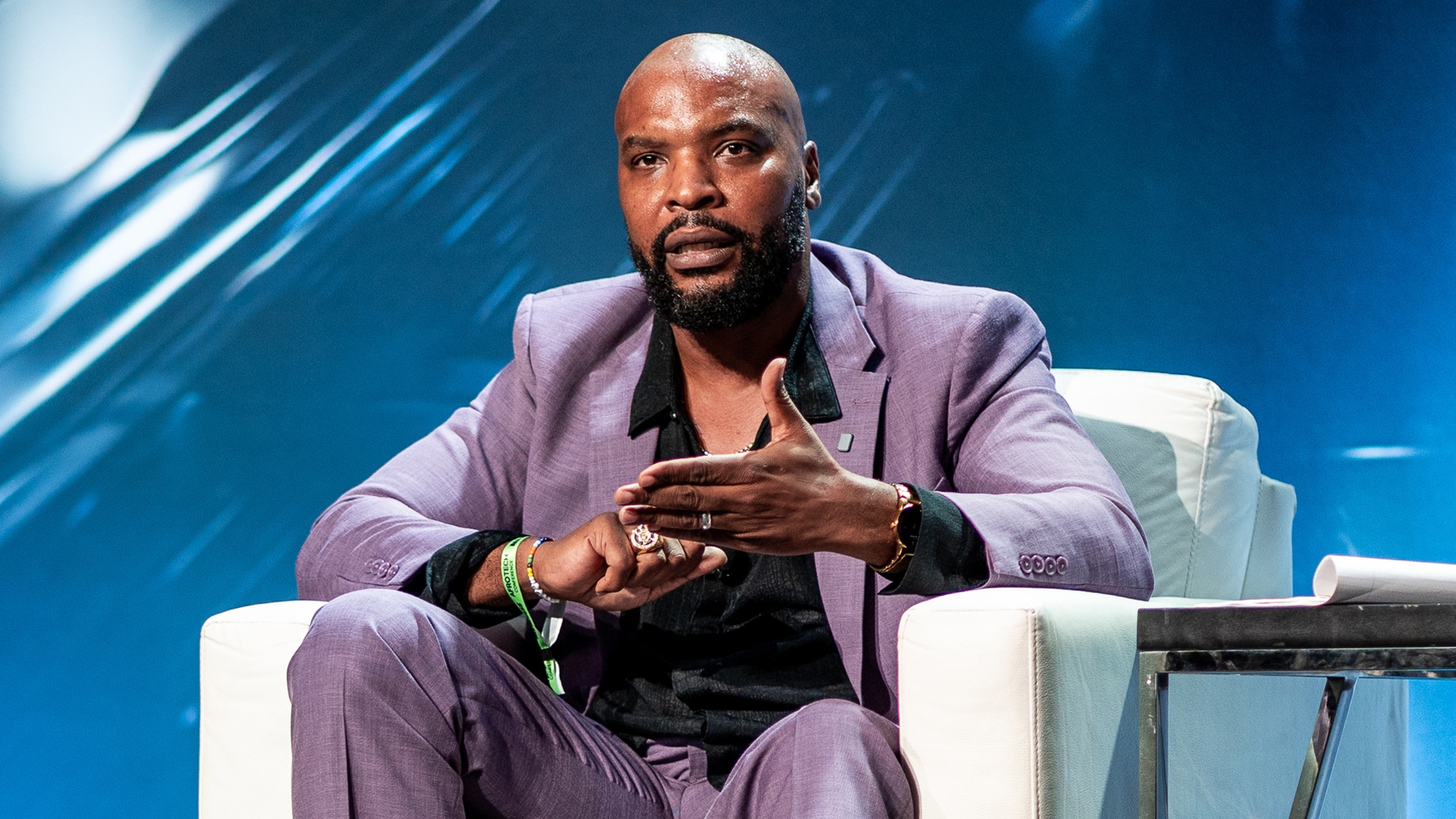
National civil rights attorney Lee Merritt wants Black professionals to understand their power in the workplace.
Merritt is a nationally recognized civil and human rights attorney who litigates under the federal law of Section 1983 and is a street organizer. He has worked with families to represent cases such as those for Ahmaud Arbery, Botham Jean, and Atatiana Jefferson. At the 2026 AFROTECH™ Conference, Merritt spoke on how Black professionals can build power at work during a time when “the current administration is actively taking shots” at that progress, as he put it.
“I’m used to empowering us in the courtroom, but the workspace is under attack,” he told the audience. “Black women’s jobs, Black folks’ jobs are under attack. The Black unemployment rate is skyrocketing. We needed to address the power.”
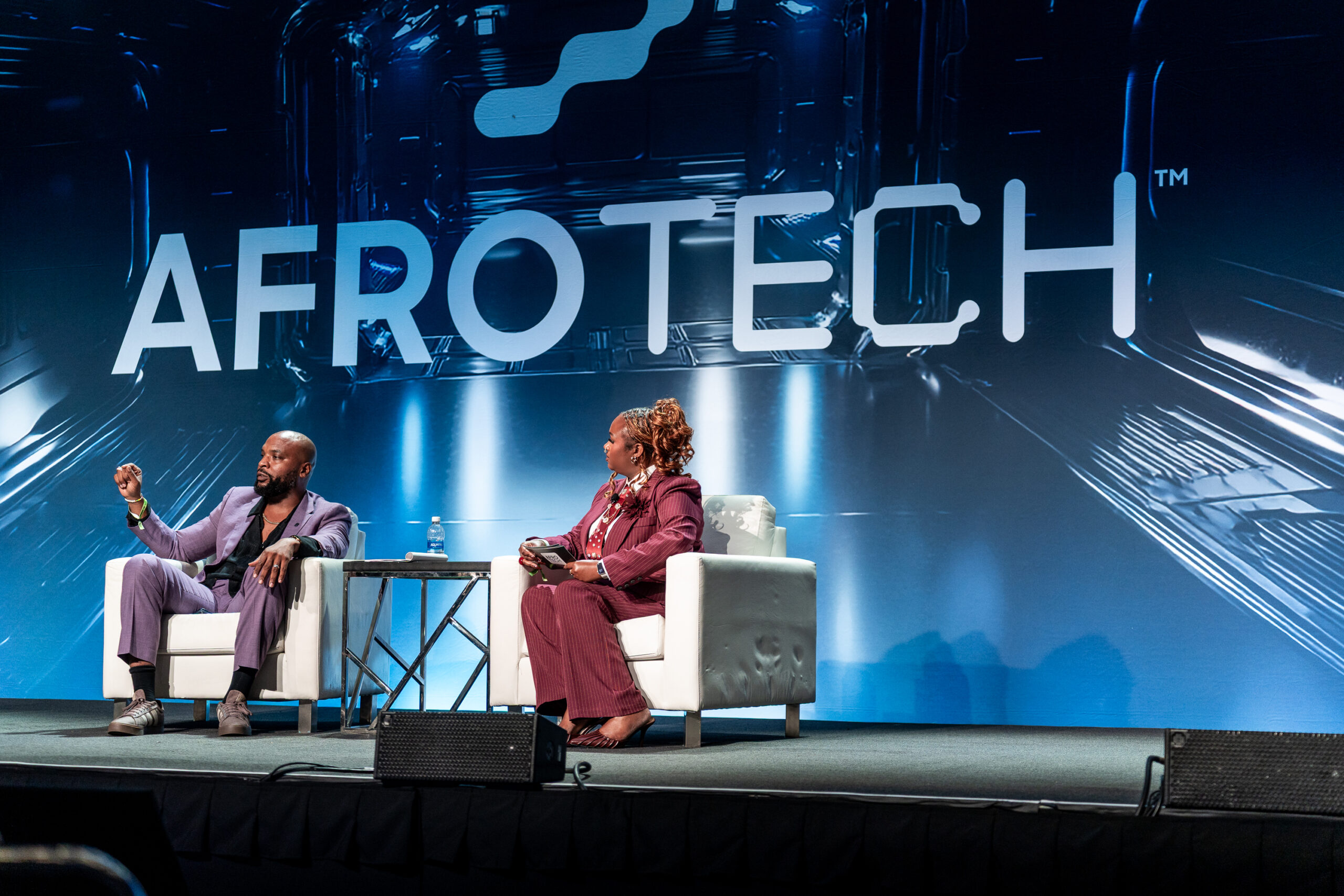
Speaking with journalist Shanique Yates, Merritt noted that taking control of your power in the workplace shouldn’t happen only in the moment of conflict, after being overlooked for a promotion, or when you’re terminated or demoted. By then, he argued, it’s too late. Learning your workplace rights and understanding how the law works so you can act accordingly should start on day one.
Merritt spoke Wednesday, Nov. 4, in the session “Protect Your Power In The Workplace” at the AFROTECH™ Conference, which is celebrating its 10th anniversary in Houston. The conference runs through Friday, Nov. 6, and tickets are still available for the rest of the week.
He addressed discrimination in the workforce and noted that some of his commentary drew on experts he consulted to ensure AFROTECH™ attendees were as informed as possible. This includes gray areas in workplace decisions. For example, someone might be hired because they look like the CEO or are considered a better culture fit or because they present themselves in a similar way. He shared that 70% of promotions happen in this gray area. To understand whether a situation in this gray area warrants involving a lawyer, he said three things should be considered, starting with whether a potential hire or worker is a member of a protected class.
“If there’s a policy that says, ‘Hey, Black folks can’t go, that’s easy,'” Merritt said. “If there’s a policy that says, well, women aren’t qualified for this position, or they’re going to get a cut, then that’s a protected class.”
Second, consider whether there is actual harm, not just bruised feelings, that impacts the ability to work. He noted that this harm doesn’t need to be significant, but can be “just any harm.” Third, he said to consider whether a similarly situated individual, meaning someone else at your place of work who is not within your protected class, is receiving better treatment and “is not being forced to go the extra mile.”
“Once we have those three lined up, now we’re talking legal case. The other gray area is where most of these decisions are made,” Merritt explained.
Furthermore, he pointed to various diversity, equity, and inclusion (DEI) commitments that have been pulled back at the federal level, which has also created a shift influencing attitudes across corporate America. This has contributed to 600,000 Black women becoming unemployed, according to Fortune. He said some workers are now unsure how to grow within their workplace with DEI no longer being uplifted, or they don’t know how to remain an advocate for diverse groups.
Merritt noted that DEI is not illegal and stated that President Donald Trump’s executive orders are “toothless” beyond the federal government. He also reminded workers they can seek support at the state level under Section 1981, which applies to constitutional use of force by state actors.
“Section 1981 says that the Constitution applies to employment cases as well, and you actually don’t have to meet any of the EEOC [Equal Employment Opportunity Commission] requirements in order to bring a case under Section 1981 of the federal statute,” he said. “You don’t have to go through the Title VII process. You can still get those protections from your brand-new Texas Attorney General who replaced Ken Paxton. You can still get it from your brand-new Georgia Attorney General, the first Black woman in [the state’s] history.”
He added, “We still have power at the state level. We can still fight for ourselves. There are state organizations, state advocacy organizations that can continue to fight for employment rights, and that’s where we find our power when the federal government steps back.”
Merritt also said Black professionals should shift their mindset from seeking mentorship to landing executive-level sponsors who can play a key role in their advancement, even setting up these individuals to replace them. He further emphasized the importance of ownership.
“I am encouraged that this generation of employees, of tech workers, are thinking about how they can do it on their own, how they can own their own genius and use that to make businesses profitable for themselves as opposed to giving away our best to other folks,” he concluded.