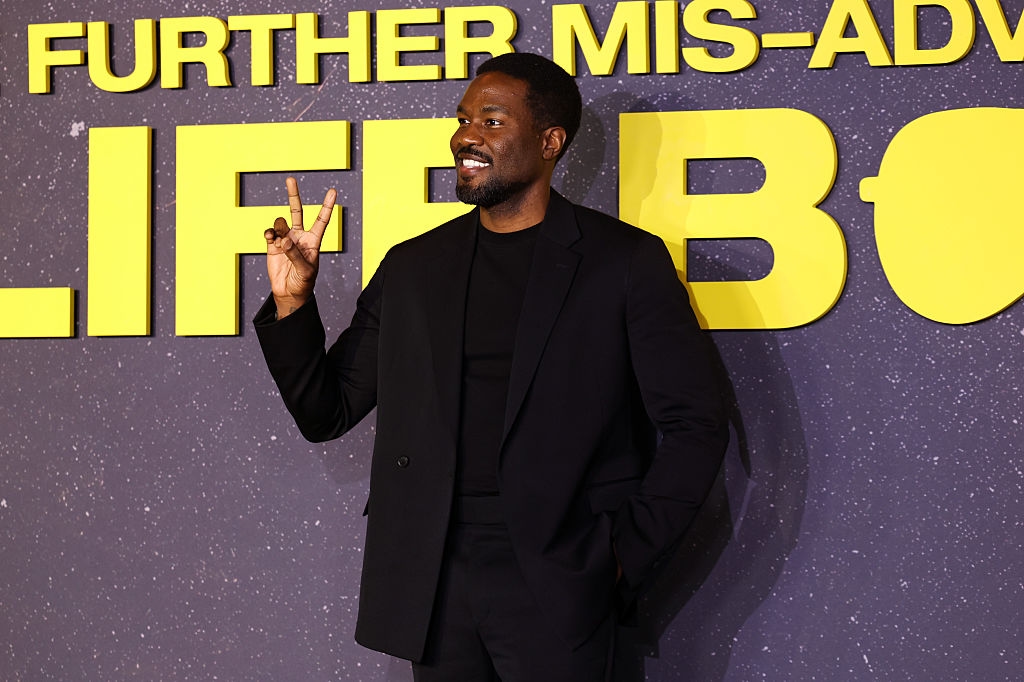
Yahya Abdul-Mateen II sees a direct line between the Black filmmakers who built the blaxploitation era on tight budgets and the creators now building audiences on YouTube and short-form video.
The Emmy winner plays Roderick “Hot Rod” Harrison, a pro football champion turned screen star, in Netflix’s The Further Mis-Adventures of Cliff Booth, David Fincher’s follow-up to Once Upon a Time in Hollywood. The film, written by Quentin Tarantino, opens in a two-week IMAX run on Nov. 25 before premiering on the streamer on Dec. 23.
Hot Rod draws from the blaxploitation films of the 1970s, a period when many filmmakers worked with limited resources and little support from major studios. Abdul-Mateen told AFROTECH™ Culture he sees the same pattern playing out now.
“We live in a time now where people are trying by any means to get their voices and to get their art out,” he said. “Social media, YouTube platforms, you have shorts now. People are doing verticals and things like that.”
“If you just look at the history, it’s sort of just repeating itself,” he continued. “You got a lot of young and hungry people who have something to say, who are talented, who are saying, ‘You know what, the industry isn’t giving us a chance. We’re gonna make our voices heard, and we’re gonna put our things together and just make someone notice it.’”
He added that he’s curious how this moment will be judged decades from now.
“It’ll be interesting to see how the story that’s being told right now is captured and viewed in 20 years, 30 years, 40 years,” he said, comparing it to how audiences look back on the blaxploitation era today.
Abdul-Mateen admitted he couldn’t name many blaxploitation titles offhand, but pointed to Black Dynamite, the 2009 film that works as both a parody of and homage to the genre, as a favorite. He said the style would be hard to pull off in today’s market, though he’d like to figure out how. Playing Hot Rod, he said, was a chance to step into that world.
“I had a lot of fun,” he said.
Co-star Carla Gugino, who plays Toni Peters, raised another business point: the film was shot in Hollywood at a time when much of the industry’s production work has moved out of the U.S. The project was expected to generate $105.9 million in qualified spending in California across 110 filming days.
“We’re really trying to get business back to Hollywood and make movies in Hollywood, and this movie was made in Hollywood,” Gugino said.
