Artificial intelligence (AI) is gaining ground across industries, including entertainment.
Google DeepMind has invested $75 million in A24 to build AI tools for filmmakers, The Hollywood Reporter reported.
The deal includes an AI research and development lab and is nonexclusive, structured as a research collaboration between DeepMind researchers and A24 filmmakers. DeepMind has called the partnership “first-of-its-kind.”
“We believe the best way to develop tools that empower artists is to work directly with them,” Google DeepMind CEO Demis Hassabis said in a statement. Scott Belsky, an A24 partner who leads A24 Labs, told The Wall Street Journal the studio’s approach differs from AI pitched as a way to make films cheaper and faster. “We think there are better uses that preserve creative control and support risk-taking,” he said.
Is this the first time a studio is embracing AI?
While the A24 and DeepMind partnership is a significant AI deal in film, it isn’t the first.
Disney announced a licensing deal with OpenAI in December 2025, including a planned $1 billion investment, but pulled out in March 2026 after OpenAI shut down its Sora app. Lionsgate’s partnership with Runway, announced in September 2024, expanded in June 2026 when Lionsgate took an equity stake in the AI company.
What does this mean for Black filmmakers?
What does the deal mean for independent creators outside A24, and for Black filmmakers in particular?
Lamar Richardson, a three-time Tony Award-winning Broadway, film and television producer, said his gut reaction to the news was “Terrified.”
“Now listen, you know, AI is rapidly developing and has multiple functionalities and capabilities that we have no idea of where it can go,” he added. “It’s in the early stages now, and we’re already seeing, you know, you can pop in an idea for a script, and it’ll start writing the script. You see it starting to make short films and all these kinds of things, and these are in the infancy stages.”
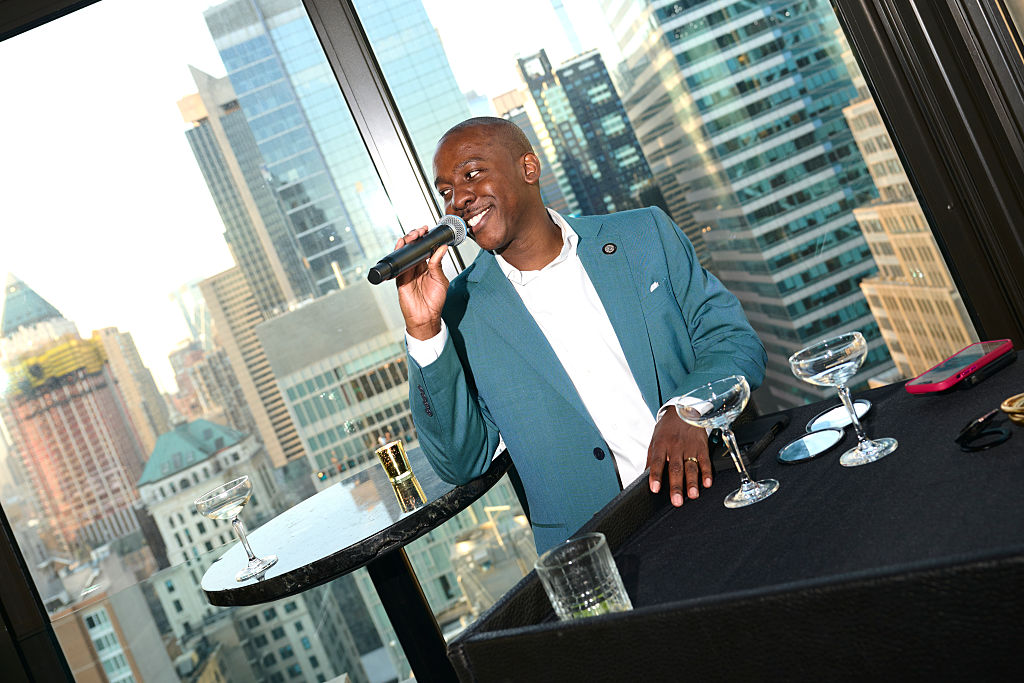
At 33, Richardson is the youngest Black lead producer to earn a Tony Award in a top production category thanks to Ragtime taking the prize for Best Revival of a Musical. He previously won Tony Awards as a co-producer of Appropriate and Merrily We Roll Along in 2024.
“The problem is when you pump that kind of money into something like that, and hunker down on development and research and giving it tons of stuff to study from and absorb, it’s going to become a catastrophic monster that we’re all going to be fighting against as it works to make things more efficient and cuts out different departments that have been historically necessary in the filmmaking and creative process,” Richardson explained.
The collective power in ownership within the entertainment industry
Richardson is also the co-founder of Ivy Lion Productions with his wife, Zaire Richardson.
“Zaire always was of the entrepreneurial spirit, and even in our early stages of our relationship, when I was just wanting to be an actor and a performer, she was always someone that eventually wanted to have a production company, and I [was] always going to be supportive of that, but never really saw myself playing an active part in that becoming a reality for us,” he said.
Richardson said he saw a gap in events celebrating Blackness on Broadway each season and decided to build his own.
“A couple of years ago Colman Domingo threw a dinner, that was wonderful,” Richardson recounted. “The year after, Amber Ruffin and Titus Burgess threw a party as well, and that was fun. And I was like, okay, it’s great to have these amazing artists who come into the season and do an event when they’re there. But what about the seasons when they’re not? I’m someone that’s on Broadway every single season. So why don’t we, through our company, found this event so that we can throw our own party every single year? That was really the goal behind it.”
He added, “It was really about curating space, right? Curating space for us to come. It doesn’t matter what show you’re on. It’s not about being different. It’s about being together in that given time, and us carving out a space for everyone to come and love on each other, and to be in community and celebration with each other at a time where DEI is being struck down, and voting rights are under attack. All these different things that are happening to kind of disenfranchise us. How can we come together and synergize for change and for positive effect?”
What does equitable access for Black filmmakers look like moving forward?
As Richardson builds out Ivy Lion Productions and takes on television and film projects, ownership and infrastructure remain top of mind for him.
For Richardson, if AI tooling becomes standard studio infrastructure, as it’s framed in the A24 and DeepMind deal, with storyboards and workflow rather than generative replacement, equitable access for Black creators means ensuring they are key decision-makers at those studios and in those rooms.
“If we’re going to take this step forward, we need to have X amount carved out to ensure that this community is included in that,” Richardson concluded. “Because as we know, without that, it will not happen, and that’s the major problem with it because even from my own work and just in Broadway and getting into these rooms and spaces, I really see just how important that voice is because if you’re not there, the thing about it is, it’s not even always malicious. It’s just sometimes it’s an afterthought.”
He added, “And that is the problem there when there’s not a perspective that is uniquely in line with the majority opinion, there will be no outside for foresight into it, which is inherently going to ultimately limit and restrict those of us on the outside trying to come in.”