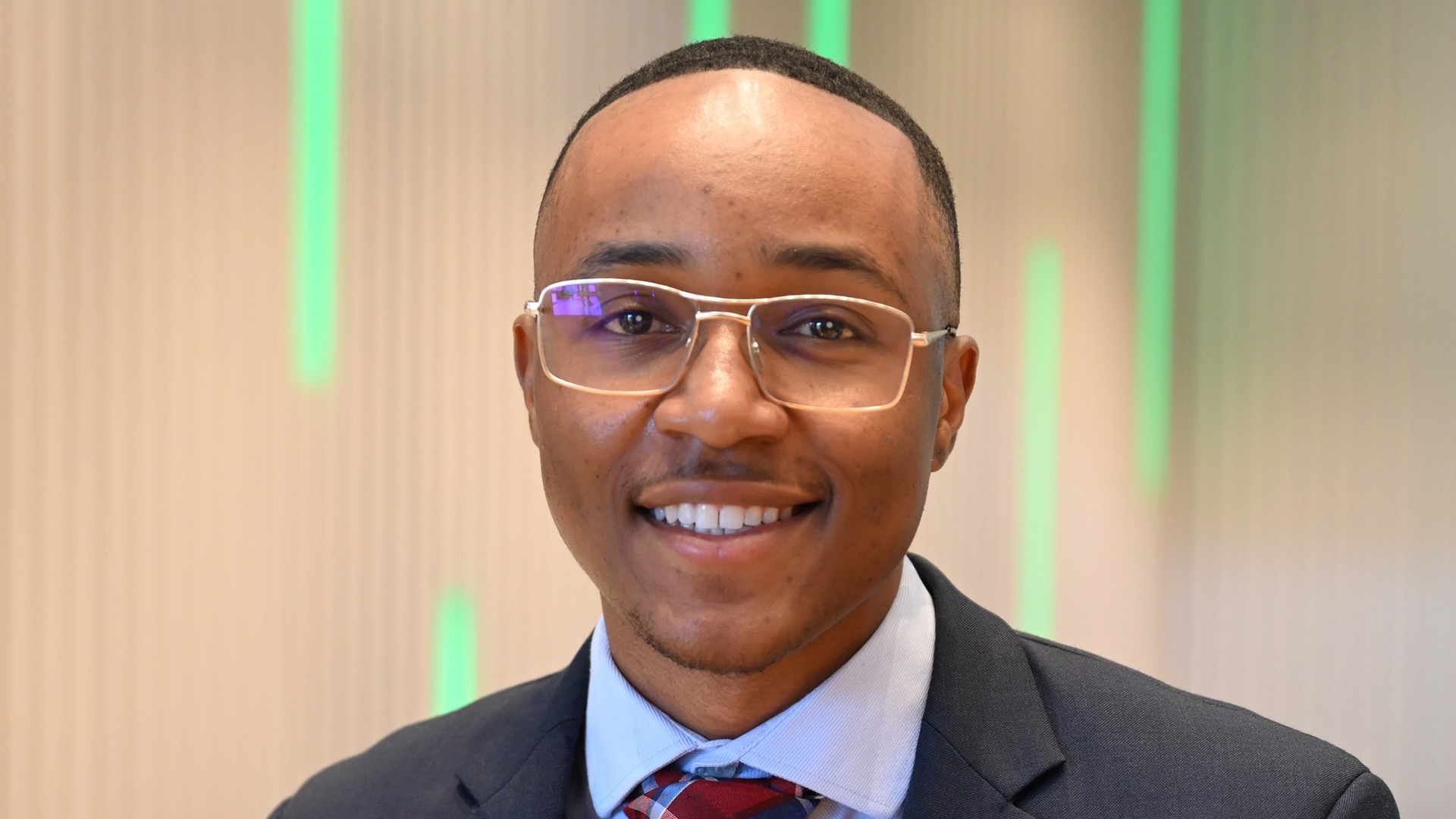
Xavier Allison’s current career focus is ensuring executive leaders and transformationists scale AI responsibly.
Allison is a technology consultant specializing in global transformation and an executive MBA graduate with a decade of experience working across workflows where data and institutional knowledge inform decisions. He currently works for a Fortune 100 company, supporting executive leadership in making sensible business decisions, he told AFROTECH™ in an interview.
Allison has collected observations that shape his thesis for executive leaders and transformationists: “The future of AI belongs to leaders who treat context as a strategic asset in large-scale implementations.”
He believes companies can leverage complex AI systems, but doing so will not compensate for poor decision-making. Nor will automating work provide context for why that work exists. Intelligence and context go hand in hand.
“My problem statement is that the AI conversation is moving quickly. I think the pressure to act is understandable, but leaders are being asked to demonstrate returns and accelerate very fast,” Allison explained. “My point here is that speed without context can create a costly illusion of progress. And there seems to be a gap between what the system records, so raw data, and what the business understands, and that’s institutional knowledge. But the problem there is it can lead to ineffective outcomes and declining performance.”
He recommends treating institutional knowledge as infrastructure, designing AI around business outcomes and keeping human judgment at the center. He also advocates establishing an AI hub to capture context from various areas of the business, an approach he believes is particularly well-suited to large enterprises.
“I think there needs to be representatives embedded across functions, including finance, customer support, legal, fiber teams, and a regular cadence for updating information into the context layer, whether that’s on a monthly, quarterly, or an as-needed basis,” he explained to AFROTECH™.
Allison adds that in the autonomous era, leadership is no longer simply about making decisions but about establishing the conditions for making the right decisions. Leaders will need to determine which outcomes, resources, and policies they are optimizing for; how to resolve competing priorities; and where human judgment is to be inserted.
“While AI may increasingly make the decision, leadership remains accountable for the context, for the boundaries, and for the values that shape that decision,” he explained.
Allison says leaders should ask themselves the following questions to focus on what matters most:
- What business decision, workflow, or customer outcomes are we trying to improve?
- Does the system have access to relevant, current, and authorized information?
- Who is accountable when sources conflict or when the system is wrong?
- How will we measure value?
“I think these questions move the conversation from AI adoption to genuine AI readiness,” he explained.
He concludes with a call to action for Black executives and transformation leaders, emphasizing the importance of representation in shaping AI’s future.
“I think representation matters for us as Black technology leaders. Participation in these discussions can help to expand influence from implementing AI to shaping the enterprise practices that determine how AI is used. So take advantage of the seat at the table that we do have while the infrastructure is being built. We are the next generation of leaders,” he explained. “We must be prepared to shape not only what the organization automates but also what they preserve, what they prioritize, and how they remain accountable for the decisions that their systems support.”