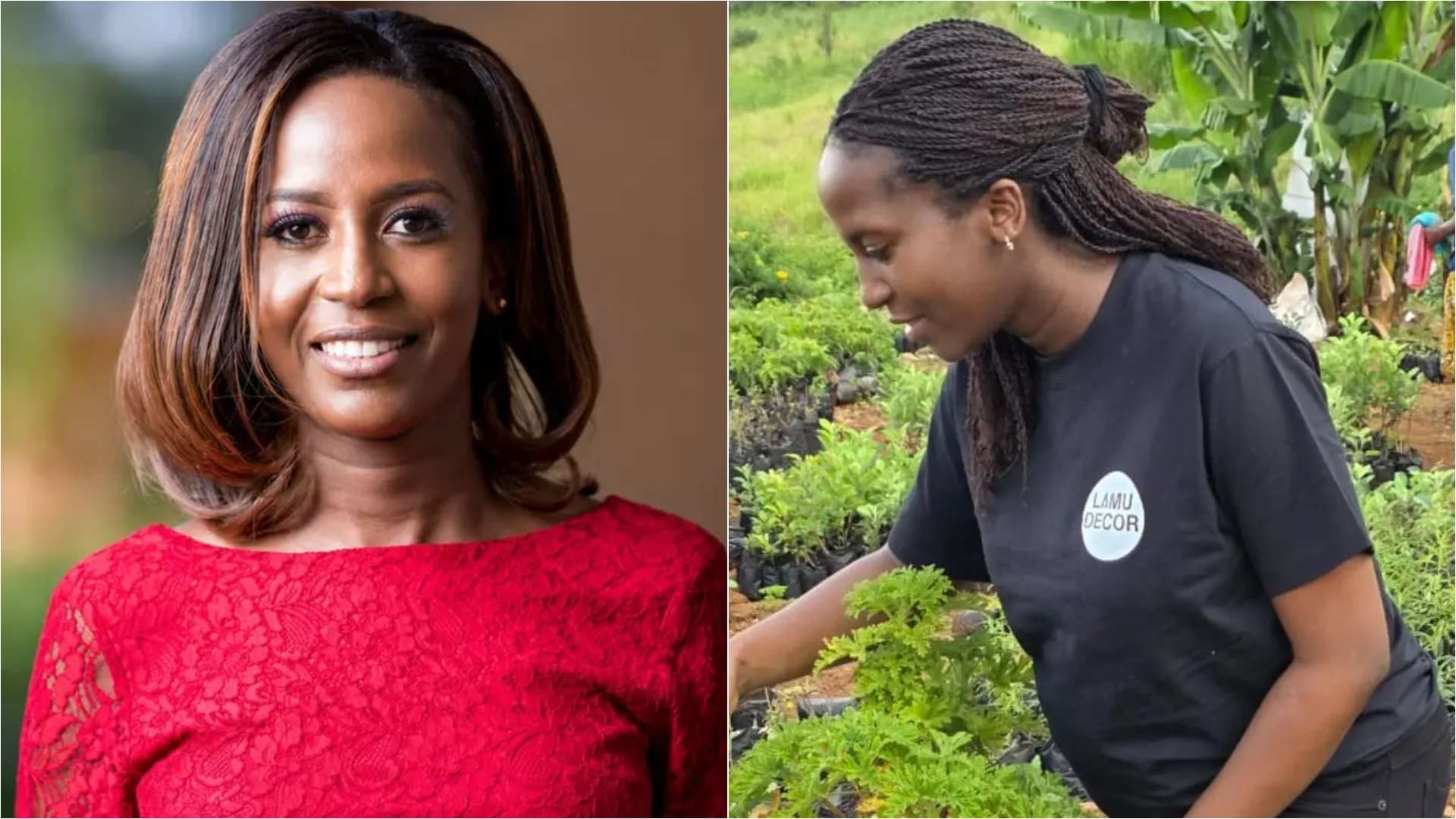
Doris Njagi is working to restore the forest she grew up beside, and her model now reaches across East Africa.
Njagi grew up on the slopes of Mount Kenya, where she watched the forest thin year after year and farming families she knew work harder yet stay poor.
“For a long time I did not connect them,” Njagi told AfroTech, referring to the forest loss and the poverty she saw growing up. “The moment it clicked was later, after more than a decade in climate finance. I sat in rooms where large sums were committed to protecting forests exactly like the one I grew up beside, and I almost watched none of that money reach the farmers who actually decided whether a tree stands or falls. That was the moment. I realised the problem was not that people did not care about the forest. It was that we had built a system where caring for it cost them, and I could not unsee it. I left to build the thing I had failed to find inside finance.”
Creating a scalable solution
Njagi helped create Forest Restored, a social enterprise that restores degraded land across East Africa by paying smallholder farmers to grow native trees.
For Njagi, restoring the ecosystem and lifting households out of poverty go hand in hand.
She said the model rests on three layers that make it replicable beyond a single region.
“There are three layers. The first is verification,” she explained. “Cheap monitoring is the reason smallholders are locked out of carbon markets, so we built our own, combining satellite and drone imagery that tracks tree survival across thousands of scattered farms with acoustic sensors that measure returning birdsong and pollinators and detect chainsaws and fire.”
“The second is payments. Verified growth triggers mobile money directly to the farmer, rails that already work across East Africa,” Njagi continued. “The third is trust, delivered by women extension officers drawn from the communities themselves. That combination, cheap proof plus instant payment plus local trust, travels. It is not tied to Mount Kenya. It works in the highland forests and in the coastal mangroves, and the same system can run in any smallholder landscape in the region.”
Njagi is a finalist for the Pritzker Emerging Environmental Genius Award
Njagi is a finalist for the 10th annual Pritzker Emerging Environmental Genius Award, given by the UCLA Institute of the Environment and Sustainability.
She is among three women named finalists for this year’s $100,000 prize.
For Njagi, the money would go toward what she believes will unlock everything else: “Reaching more farmers with the model already proven.”
“Concretely, that means expanding into new landscapes, onboarding and training the next communities, and strengthening the verification technology so we can prove more trees at lower cost, which is what keeps the whole model affordable at scale,” she shared. “It is not primarily about inventing something new. The invention works.”
Njagi concluded, “It is about extending a working system to more of the households and forests that need it, and deepening our field teams and monitoring so that growth stays honest and measurable. The award would also carry weight beyond the money, because the recognition helps us reach the partners who can help us scale Forest Restored.”