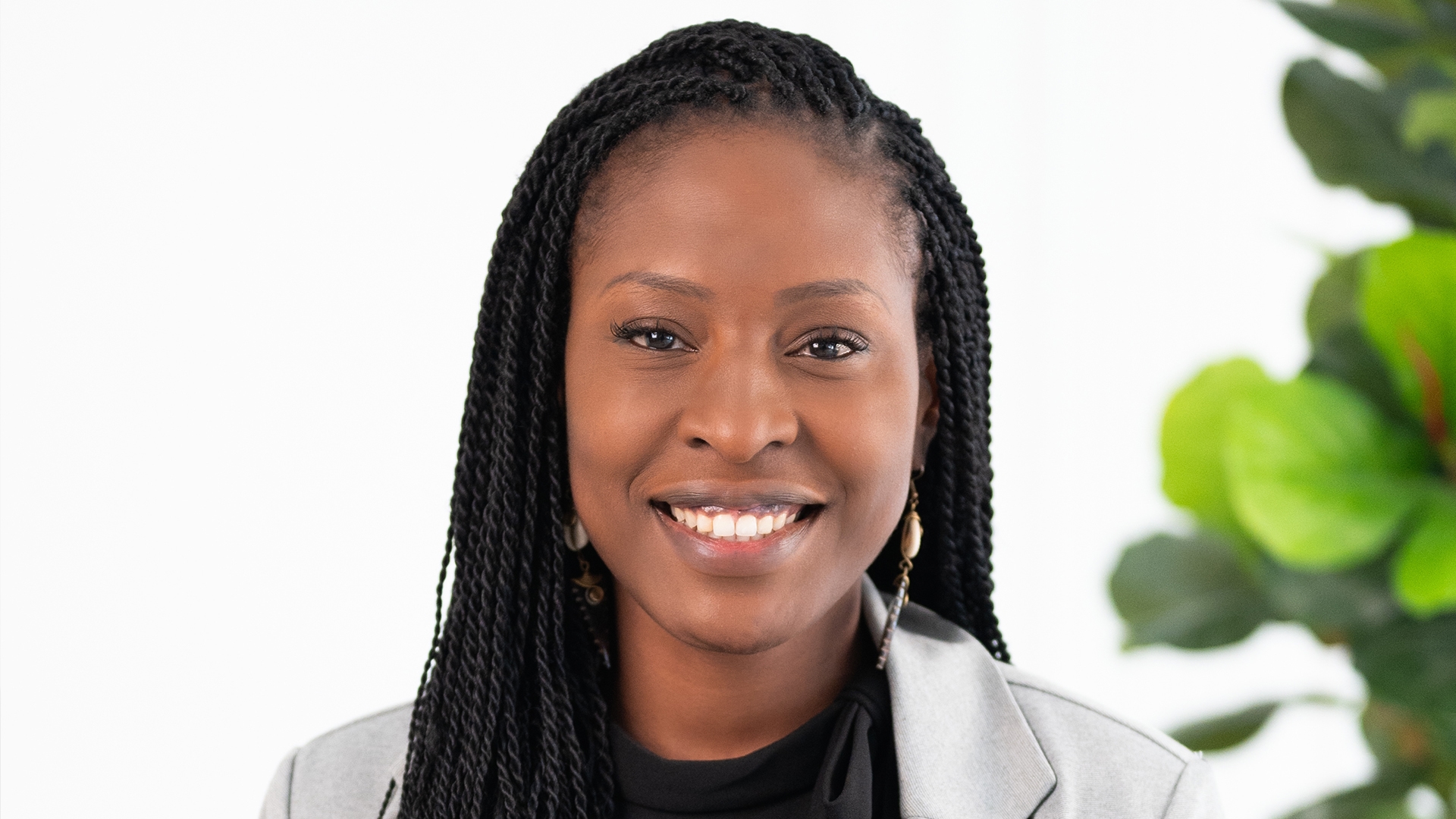
Lise Birikundavyi’s investment philosophy is simple: You can do good and do well.
She was born in Burundi, a country in East Africa, and moved to Montreal, Canada, at a year old because her father was pursuing a Ph.D. there. In conversation with AFROTECH™ after a roundtable discussion at the NRTH Festival in Toronto, she recalled being surrounded by “highly ambitious, educated” people in Montreal and when she went back to visit Burundi as an adult. Yet what the media portrayed was “clashing with what” she saw around her in the Black community.
Speaking specifically of her observations in Burundi, she added, “I met some of the smartest people that I know of until today. It’s mainly a Black population, but it’s one of the poorest countries in the world. This thing that talent is equally distributed and opportunities are not, just felt very true.”
Birikundavyi became interested in business. She did an exchange program in Argentina and recalled reading “How to Change the World” by David Bornstein, a book about social entrepreneurs.
She said it talked “about all those people just innovating in their own countries, taking charge of their own problems, and also making sure that this was sustainable financially.”
“And I thought, ‘There’s something to be done around that sort of link to ownership, to quote-unquote sovereignty, to change the narrative, and I want to be part of it,'” she added.
Birikundavyi started working in hedge funds, became a Chartered Financial Analyst charterholder, and decided to specialize in social entrepreneurship and impact investing. She spent two years in Shanghai, China, learning about emerging markets, building a professional network, and deepening her understanding of China-Africa relations.
“I wanted to understand who else was around the table. China is very present,” she said.
She pursued a Master of Business Administration degree in the country, researched impact-focused public indexes, and became convinced that impact-focused portfolios could outperform traditional ones.
After graduating, she moved back to Toronto and worked for a fund of funds focused on impact investing in emerging markets, she says. Then, after becoming a first-time mom, she spent time in Ghana and worked for the Engineers Without Borders’ Impact Fund in 2016 on a stipend, eventually serving as a temporary CEO of a company in its pipeline.
“I think my empathy grew being in those shoes because we had investors giving me the same feedback I would give an entrepreneur,” she said.
Then, she worked on impact investment strategies for a Swiss foundation with a strong presence in Côte d’Ivoire, investing in education technology. When she had her second child in February 2020, she took maternity leave in Toronto. During this time as the COVID-19 pandemic took hold of the world, she continued to see the self-empowerment and innovation pouring out of the Black community. This along with her observations from Africa — including a 2017-18 uprising in Kenya where many felt that, to be funded, they needed a foreign co-founder — and North America showing the funding gap for Black founders informed her next career move.
“When you sort of think about the funding gap that exists in North America, where we are a minority, if you sort of think about the U.S. or here (in Toronto), that still exists in places where we’re not a minority — it just does not make sense,” she said.
Her belief in funding great entrepreneurs led her to work closely with Isaac Olowolafe in 2020, who became her co-founder at BKR Capital, a venture capital firm investing at the pre-seed to seed stage in technology or technology-enabled startups with a mission to “diversify the face of success.”
As AFROTECH™ previously reported, chosen startups must have at least one Black founder, and most companies in its portfolio are based in Canada. Fund I raised more than $22 million in 2021.
“We became the first Black-led VC fund in Canada,” Managing Partner Birikundavyi recalled. “We had a lot of institutional backing.”
In 2026, the firm confirmed it raised $20 million for Fund II, backed by the Royal Bank of Canada, the Business Development Bank of Canada, and Export Development Canada, with a goal of reaching $50 million by the end of the year. Despite what she described as “anti-DEI sentiment” in Canada, the firm is doubling down on its strategy while navigating an investment ecosystem she says is more conservative than the U.S.
Fund II is investing in areas including the future of work and future of living, with check sizes ranging from $250,000 to $1.5 million. The fund has supported four companies (as of this writing), including a physical AI company and one in the proptech sector.
Programs
Additional efforts include the BKR Catalyst Institute, a nonprofit launched in 2022 that equips, mentors, and upskills mid-career Black professionals in venture capital.
A newer program is for aspiring fund managers, encouraging participants to start their own fund while helping them strengthen their track record and build a skill set, she says.
“Two of them have launched their fund zeros,” she added.
Across 11 deals, Black-led Canadian startups received $10 million in funding for 2025, while Black founders’ market share of Canada’s total venture capital funding declined by 0.15%, according to the Black Startup Funding Report published by BKR Capital and Rep Matters.
Birikundavyi hopes BKR Capital’s work in Canada will one day become less necessary.
“If the funding gap is solved in Canada, why not go somewhere else with that same thesis? Still being Black-focused but being more global,” she added.