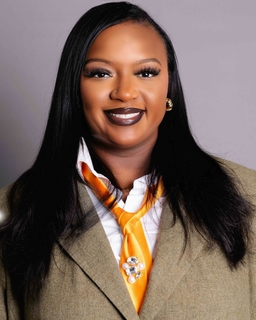
For the last decade, Yolo Akili has been building a platform rooted in community and care.
Amid a wave of online self-help content and commentary on mental health that isn’t always rooted in facts, Akili created the Black Emotional and Mental Health Collective, better known as BEAM.
“The idea came from my experience working in community mental health settings, and seeing how systems operated, and at the same time I was working in these settings, I was also learning a lot through my own exploration of the history of mental health and how mental health impacted our communities,” Akili told AFROTECH™ Culture. “I had a vision and idea that things could be different and maybe more dynamic, maybe more loving and more skills focused for all of our folks.”
He added, “It was really that kind of visioning that led me to want to create an institution that questioned the ways in which we think about mental health, and also offer different strategies.”

Building on cultural capital vs. the typical VC model
Relationships are at the core of how Akili has built BEAM.
“I think relationships are the core of everything,” he said. “In my spiritual belief, relationship to yourself, relationship to the world around you, to other people is critical about how we build. So, I think what has happened with BEAM over the last 10 years is that, not only have we shown up and stayed connected, listened to community, and responded by building programs and offerings that really reflect what community needs, I think that has built a trust that has helped us grow.”
“I get a lot of excitement when we have so many mothers who bring their sons and literally drop them off at the men’s circle that we have at the YMCA Crenshaw. There’s trust there,” Akili continued. “Relationships are the foundation of everything. If you know how to be in connection with people, how to identify people who have values that align with you, you can really go far.”
Over the years, Akili has partnered with public figures like Sir John, Laura Harrier and Jerrie Johnson. For him, it is much more than someone reaching out for an opportunity to partner; it is about alignment.
“Do you understand who we are? Are you interested in learning who we are, or are you just looking for an opportunity to pat yourself on the back?” Akili explained.
He added, “I don’t think of them as like celebrities, but as human beings and really powerful colleagues and friends who have a commitment to wellness in their own work and want to partner with BEAM to further that work in the world. Their presence, their visibility, their care, their commitment, and connection to resources have definitely been one part of what has made BEAM sustainable. Of course, all of our foundation philanthropy partners, as well as our community donors, support us, but I have to admit that I would say that when it comes to ‘celebrity partnerships,’ people like Laura and Sir John are exceptional, not because they definitely have platforms, but it’s really their hearts and character that have driven us to be connected with them.”
Jerrie Johnson’s connection to BEAM
“The first time BEAM truly landed for me was at a dinner called Rooted in Care. I had heard of the organization before, but I hadn’t yet experienced it,” said the Harlem actress. “This was during award season- a time that can feel incredibly transactional, performative, and disconnected from the body. And then I walked into this space that felt… intentional. Grounded. Human.”
She added, “It was one of the most meaningful gatherings I had attended, not just in that season, but in general. We weren’t networking- we were in real conversation. We were talking about the state of the world, the industry, and what it actually means to care for one another in a time that often asks us to bypass that care in pursuit of success.”
When it comes to the weight of expectation that is often associated with attaching her name to mental health work as a Black woman in Hollywood, Johnson says her approach to the work may be shocking to others, but it’s always authentic to her core values.
“Honestly, I didn’t weigh it in the way people might expect. My compass is authenticity. If something resonates with me on a soul level, I move toward it without over-calculating how it will be perceived,” she shared.
“That said, I understand the risk in hindsight. There’s a certain exposure that comes with aligning publicly with mental health work, especially in an industry that often rewards perfection, performance, and emotional distance,” Johnson continued. “But I think we’re in a time where that paradigm is shifting, and I feel called to be part of that shift.”
She added, “For me, it’s less about ‘putting myself out front’ and more about standing in alignment. If I’m talking about liberation, if I’m building work that invites people into deeper truth, then mental health isn’t adjacent, it’s foundational. So the question becomes not whether I attach myself to it, but how honestly I’m willing to show up within it.”
What’s next for BEAM?
With a decade under its belt, BEAM remains committed to the community. As far as the next 10 years go, Akili says it’s not dependent on his vision, but what the collective is looking for.
“It’s going to mean more collective healing spaces, going deeper into the work with the communities I work with, and that we all are going to craft that together,” he said. “I can share that I’m sure it’s going to mean more collective healing spaces, going deeper into the work with more tools and more clarity, making sure that we’re holding space for people of all backgrounds and advocating for immigrants and all the nuances that we live in. I really feel like the vision for me as a leader: I see leadership as facilitation, and that part of my work is to facilitate the collective wisdom of not only my team but of the community.”
Next up is BEAM’s guide, What I Wish My People Had Known, which serves as a psychiatric Green Book for Black people.
“We decided to create this guide because over the years, we have constantly received phone calls and emails from families of all backgrounds who were in distress because a loved one was in the psychiatric system and they had no idea how to navigate it,” Akili concluded.
He added, “Sometimes a loved one was on an involuntary hold, and families were shocked to find that the psychiatrists don’t have to take the guidance of the family, right? Even if it’s their child, right? And so we wanted to create a guide to help families know what to do, not just families, but community members in general broadly, to say here are your rights, here’s what you can do to protect yourself, here’s how to navigate the system, because a lot of that information was just in so many small places on the internet and on different websites, but never kind of brought together in a way that was accessible.”
The guide is modeled after the traditional Green Book, the historical book that helped Black people know where to navigate for places that were safe to eat and get gas during the Jim Crow era in the United States.
The same vision applies to the guide, helping the community to navigate a psychiatric system that is often discriminatory toward them.
“We’re really proud of it,” he said. “It focused on the state of Georgia and California first because those are states we work in, and Georgia, of course, has a lot of mental health challenges, as well as the state of California, and so we want to make sure our folks there get it in their hands as much as possible,” said Akili.