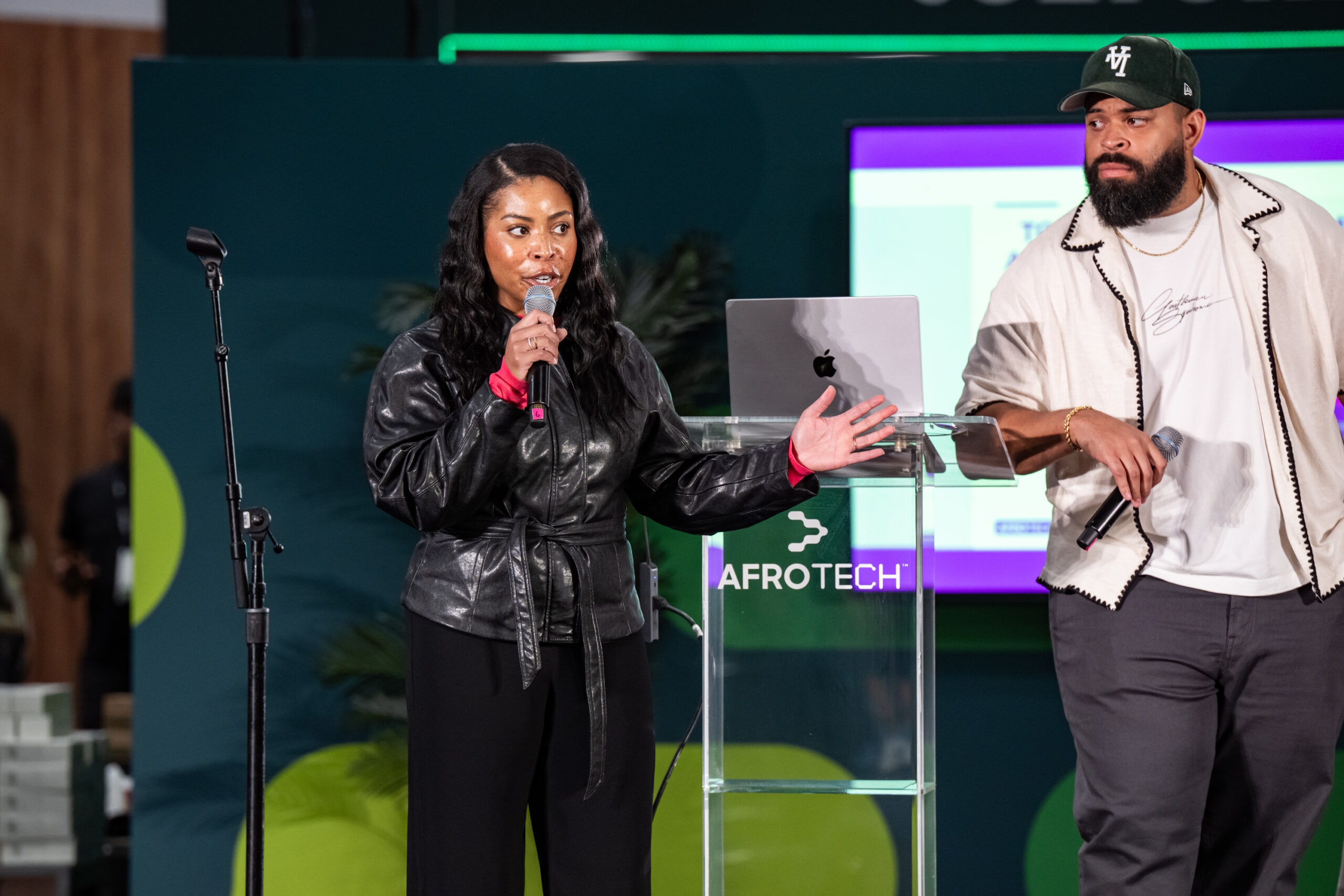
Snapchat wants creators to treat it as a communication app first and a content platform second, Norissa Samuels, creator partnerships lead at Snap Inc., told AFROTECH™ at the 2026 AFROTECH™ Conference.
Snapchat launched in 2011 as Picaboo, for iOS only, and rebranded a few months later. The app grew popular between 2012 and 2014, helped by Stories, which launched in 2013 and let users string together photos and videos that stayed viewable to friends for 24 hours before disappearing. Filters such as dog ears, rainbows and more followed.
“At our core, we are a communications app,” Samuels said. “People are going on there every day to communicate with their friends, family, maybe their college group chat, whatever it might be, but in that, a lot of people, just by being themselves, naturally started to gain followers, and we really saw that as an opportunity for creators to deepen their engagement with their fans and really build connections with their audiences.”
She added, “And so, over the past few years, we’ve been rolling out a lot of different tools, a lot of different features to enable creators to come on the app and make content, but in a way that is still at its core, is connection and community. We have a lot of tools and features that help enable that, like, you know, responding with a video or whatever it may be, because that’s what people are coming on Snapchat to do every single day.”
A platform that puts creators first
Snapchat opens to the camera, not a feed.
“That’s very intentional because, whether you’re a creator or just a regular person communicating with your friends and family, we want you to be able to capture those moments in the most raw and authentic way, and as quickly as possible,” she explained.
How is Snapchat standing out among competitors?
“Number one, we really push creation first,” Samuels continued. “Also, when you think of things like Spotlight and Stories, and how our creators have shown up on there, I think everyone overuses the word authenticity, real, and all of these things, but it really is that, because once again, just going back to the core of how we gained popularity, it was people just sharing their everyday moments, those little things that you wouldn’t even think are so exciting, but you just wanted to show your mom. The creators are still doing that for a big audience on the platform, but still in that way.”
How to get started as a creator on Snapchat
Samuels also shared tips for creators joining or rejoining the platform.
“No longer is it only ephemeral content. You can build out content, you can have a page that lives there and doesn’t have to go anywhere, and we have two primary ways of sharing on Snapchat,” said Samuels.
“One is Spotlight, which is an entertainment discovery-type feed. You can think of that almost as content that’ll get pushed out to everybody, and then Stories. It still can get pushed out, but think of that more as how you deepen your connection with your fans and bring them along for that day-to-day style content,” she added.
To get started on Snapchat, Samuels recommends focusing on Spotlight to help grow your audience. This includes short-form, entertaining videos.
“How can you hook your audience right away? Really give them context and keep them watching for as long as possible throughout the entire video. Spotlight is definitely where I would focus if you were a new creator coming on the platform, and then, of course, leaning into Stories to deepen that engagement with your audience,” Samuels suggests.
Snapchat’s approach to AI
Filters have been central to how the platform has grown and evolved.
“We have things like My AI where you can take a photo that you post, and creators can change that photo and do a lot of different things with it, and we’re not against that technology. I think, internally, we obviously use it in a lot of our tooling and our processes, but a couple of months ago we did announce that AI content is not something that is eligible for recommendation within our feed of content, and that’s because we know there’s a fight for attention, there’s a fight for authenticity and realness.”
“Our users want real creators, so AI content is not something that we, as a platform, really want to push out to our users, because we know that they don’t respond to that well.”
Creating a sustainable business
Samuels also offered tips for building a lasting business as a creator.
“Number one, I think diversification, right? Like, ensuring that you’re utilizing every platform that you can meaningfully and sustainably, obviously, without getting burnt out,” said Samuels. “I think every platform has something different to offer, and you never know when something’s gonna go away or when something is gonna change. You never want to put all of your eggs in one basket. I think it’s really important to just show up in different ways on different platforms. The other thing, too, is it’s no secret that a lot of the work that we do is all in service of brands and trying to sell things, and that’s the bottom line at the end of the day.”
She concluded, “So, really cultivating trust with your community so that they are able to take your recommendations, if you work with a brand like that, can actually translate into meaningful business results. I think I’ve really seen this industry become a lot more sophisticated with budgets and all of these changes in macroeconomics. People really need to prove that they are delivering value for their businesses, and that’s something to keep in mind. I guess what I’m trying to say is measurable results are something that’s really changing, and so if you are a creator who can do that for brands, you will see a lot of success.”