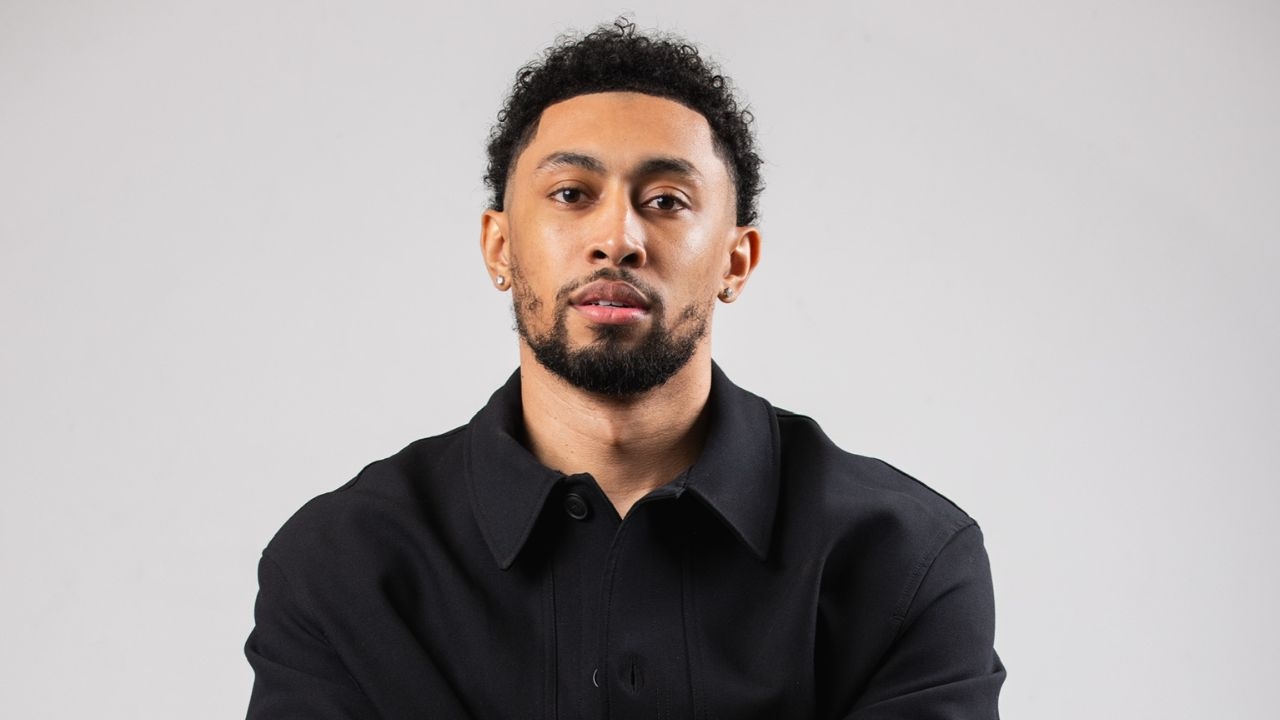
Petiri Reed didn’t set out to become the internet’s go-to voice on career reinvention. But after being laid off from his corporate finance job nearly two years ago, the Sweet Life: Los Angeles on HBO Max alum and Off The Grid co-founder turned the experience into fuel for a new docuseries, (P)ivot, chronicling his path from Wall Street to media, fatherhood and entrepreneurship.
Reed sat down with AfroTech Culture to talk about the day he learned his role was being eliminated, why he’s been transparent about unemployment when so many people aren’t, and what it actually means to pivot in 2026.
“I had manifested a layoff in the elevator”
Reed said the signs were there before the meeting even happened.
“I usually have a standup meeting with my manager set weekly, and we hadn’t had one in a while. And I see a random invitation to connect on a day that was outside of our normal schedule,” Reed said. “So I was actually in an elevator with my CEO’s admin assistant, who I’m really close with, and I was like, ‘Well, we just got a random meeting. Today might be the day.’ And I just said it jokingly, but I didn’t know that I had manifested a layoff in the elevator.”
Once the meeting started, he said he read the room immediately.
“So as they were explaining it to me, and then she said the first thing was like, ‘This is not an easy conversation.’ And after that, I immediately knew it was a wrap. What are the details? I was just waiting to get to the details,” Reed said. “So definitely some indifferent feelings, but weirdly enough, I felt elated. That was my first emotion because I was going to have that flexibility that I had been yearning for and that room to think and start to figure things out where I didn’t feel like I had that working 50 to 60 hours a week in office.”
The relief didn’t last long.
“After that initial hype had settled, I was like, ‘Oh s**t, wait, I don’t have a plan. How am I going to feed my son? Thank you for the severance.’ And went back and forth on some negotiations with that,” he said. “But either way, it was like, ‘Oh man, this is real. I’m actually an adult, and I need to figure some things out.'”
Why he’s still a proponent of having a job
Despite building a public platform around entrepreneurship, Reed said he doesn’t romanticize leaving corporate life, especially when the decision isn’t made by choice.
“I’m a huge proponent of keeping a job. I tell people all the time, ‘Listen, it’s all good to use the left or right side of your brain. I forget which one is the creative side, but do that in your free time,'” he said. “I’m a former athlete, and I worked multiple jobs on campus while going to practice, while going to school, while maintaining a social life. So I’m a proponent of the juggle without burning out.”
He connected that mindset to broader economic pressures.
“We’re in an economy, especially the Black economy, which is adverse to what the Fed and the unemployment rate are showing. So there’s a lot of Black people that are getting laid off at rates that are a lot higher than the increasing employment rate,” Reed said. “So that report comes out monthly, but they don’t necessarily talk about how it affects us specifically. So I feel like it is a blessing, but at the same time, a lot of people are being forced into entrepreneurship and trying to figure out how to create income on their own. And they’re not necessarily ready or that may not necessarily be what they’re called to do.”
His advice for anyone considering the leap: proceed carefully.
“I feel like a lot of people also don’t understand what it truly means to be an entrepreneur and the type of grind and grit that it takes to really create a life for yourself independent of working for a corporation,” he said. “And I don’t encourage people to jump into that until they really understand what it means to do so and to make sure that it’s something that they’re really ready for. And even myself, I’m understanding and learning the hard way what it means to really figure out how to go fish and eat.”
That perspective hasn’t changed. “I told this to the people who came to my private screening: if I got a job offer tomorrow, I very much would take it. This is not the end-all, be-all situation. If it makes sense, I will go clock in.”
Choosing transparency over the ‘open to work’ silence
Rather than quietly job searching, Reed decided to document the fallout publicly.
“I just feel like people can relate to that lack of resolve. And I feel like it gives comfort to know that you’re not alone. So I wanted to share that,” he said. “We’re in an age where you don’t have to rely on a network to produce something that you want to put out. A lot of people are being able to tell stories on their iPhones and getting more views than they would if it was on a traditional streaming service.”
That thinking shaped his decision to bring (P)ivot directly to YouTube.
“As opposed to continuing to live the rest of our lives saying, what would’ve happened if Petiri and his crew could have shared this story on HBO Max? I was like, ‘How do we give people an element and a glimpse into my life and my life with my friends and in this wonderful city without having to rely on the bottom lines of these corporations?'” he said. “So it was a two-part: having people feel unified during troubling times, but also it’s time to take things into our own hands.”
From ‘Sweet Life’ to starring in his own story
Reed’s first brush with reality TV came on Issa Rae’s Sweet Life, an experience he said he didn’t seek out.
“I didn’t audition or ask to be on TV, so I pay attention to the omens. It just happened. And honestly, I was going to say no because I had my job. I was finishing my MBA at the time,” he said. “I was like, ‘This might have a competing interest against things I want to accomplish on a corporate scale.’ You hear more horror stories about people that get on TV and end up in PR scandals than you do positive situations. But I knew I would conduct myself in a positive light, and I wouldn’t misrepresent myself and my family.”
Once he committed, it clicked.
“It honestly came naturally to me because I like the fact that it’s reality because nobody’s telling me what to say or what to do. Nobody’s putting me in a scene,” Reed said. “It’s just like, ‘Go out there and be yourself.’ And I felt like I was okay on camera. At least that’s what the feedback was.”
He said his comfort in front of an audience predates the show entirely. “I’ve had experience doing plays and stuff in school, playing basketball on some of the biggest stages. So being in front of people and being on camera isn’t something that necessarily makes me nervous.”
Turning an MBA and a finance background into a new chapter
Reed said his professional training shows up less in specific skills and more in resilience.
“Really, my life experience is a culmination of what gives me the confidence and the preparation to each of my next steps. And I think it really starts with, again, being an athlete. All the principles that you learn in sport help you in life, especially basketball,” he said. “A lot of people will colloquially say ball is life, and I really feel like that’s true. There’s ups and downs, there’s challenges, there’s goals you have, and it isn’t done alone either. So I have my family here to support me. I’ve got my friends. I’ve got a great team.”
That drive predates the layoff by years. “I was doing night school while going to class, while trying to run a half-marathon, raise money for kids. I was a part of three nonprofit junior boards simultaneously trying to help other students and kids in my position who are willing and deserve an opportunity to really get to their next level as well.”
He said that track record gave him confidence heading into an uncertain new chapter. “If I can be moderately successful at the place that I’m at in these different areas, then being out on my own trying to swim and fish for myself shouldn’t be as challenging. This is nothing that you’re not used to. It’s just the same effort and principles applied in a different pool.”
Facing the fear of being seen as self-indulgent
Turning a job loss, fatherhood and financial uncertainty into a public docuseries came with its own anxiety, Reed said, including the fear of being perceived as self-absorbed.
“At some points I was like, ‘Could this be too much?’ I’ve even had some initial feedback to say, I notice when people, I tell people about it, so I’ll meet people out there. They’ll be like, ‘Well, what do you do? Where are you around?’ I’m like, ‘Well, I don’t have a job and I got this docuseries.’ They’ll be like, ‘What is it about?’ I’d be like, ‘Myself.’ They’ll be like, ‘About yourself? What type of egomaniac are you?'” Reed said. “So I was nervous that people receive it as Petiri’s so full of himself that he wants to share himself with the world because he wants this praise and people to fall in love with him. And I think if you feel that way, you missed the point.”
He said the project is meant to function as a mirror for other people’s experiences, not a spotlight on his own.
“I’m truly just using myself as a vessel and an example to share my story that has parts of everyone’s story in it,” he said. “And that’s the conversation I’ve had to have with myself is, continue to remember the why behind this. And again, it’s to motivate, but it’s also really to prove to myself whether this is successful or not in whatever terms, just being able to have a vision, execute it and accomplish it is enough to say, ‘Hey, you didn’t let a situation overcome you or defeat you.'”
What a ‘pivot’ actually means in 2026
Asked to define the term at the center of his docuseries, Reed offered a distinctly online description.
“For me, a pivot is moving from LinkedIn to Lit is how I would describe it. And not that you can’t post your Lit stuff on LinkedIn, but if we had to separate the general population’s understanding of both, it’s like, here’s your formal, this is what I’ve done, this is what I’ve accomplished, here are my certifications, to more the creative, media, hosting, TV appearances, scripted stuff, that’s what a pivot looks like for me if I had to define it,” he said.
But he was careful to note the shift isn’t only external.
“Now more generally for other people, it really just means being in one space in your life, going through the dark patches and the challenges and growing and being stronger on the other side of it,” Reed said. “So in a lot of ways it’s an internal pivot and this is something that it’s touched on a little bit in the series, but it’s just the work that you have to do internally and spiritually to overcome the phase. So I think that that’s what it means in 2026. It doesn’t necessarily mean like, okay, quit your 9:00 to 5:00, become a creator. Or quit being a creator, go get a desk job. It’s more fluid and it’s adapting.”
Off The Grid is ‘so much more than a party’
Reed also spoke about Off The Grid, the community platform he co-founded alongside Tondi Mushandu, Josh Ford and Joe Cash, pushing back on the idea that it’s simply an event series.
“A lot of people just will say, even be on some profession calls and be like, ‘Okay, so this is how we usually work with promoter groups.’ And I have to stop people because yes, maybe that’s the technical definition, but we’re so much more than that,” he said. “Naturally you promote, I still send links to people with tickets and post flyers on my Instagram. So in the traditional sense I’m a promoter, but we are a collective, and that’s how we started, that’s how the world saw us as a group of young Black men that are doing positive things.”
He described the platform’s growing agency-style function.
“We also have functions of what we do that’s agency-like. Brands will come in, they’ll say, ‘How can we activate in your space? How can we sponsor? How can we partner with you?’ Whether it’s CultureCon, Ebony Magazine and some other really cool partnerships that we’ve been able to have,” Reed said. “So we’re collective, we’re an agency, we’re so much more than a party.”
He pointed to how far the brand has come since its first event in 2022.
“Our first party in 2022, we didn’t even negotiate a bar agreement. We collected $0 from the bar. We were just so excited to have an event and just seeing our business acumen grow from there, our partnerships continue to grow and the way we’ve been able to scale,” he said. “We’re about to be in our third new city this summer, so we’re on tour. So I’m very proud of our team and what we’ve been able to accomplish.”
Ultimately, he said, the brand’s success is measured by feeling, not framing. “Obviously, when [people] they look at the page, or they come to the event, they remember the experience that they have, and that’s exactly what we want to do. We want people to come in and be like, ‘I had an unforgettable time at Off the Grid.’ … I know how I felt when I was there and when I left. And that’s how we know we did our job.”
