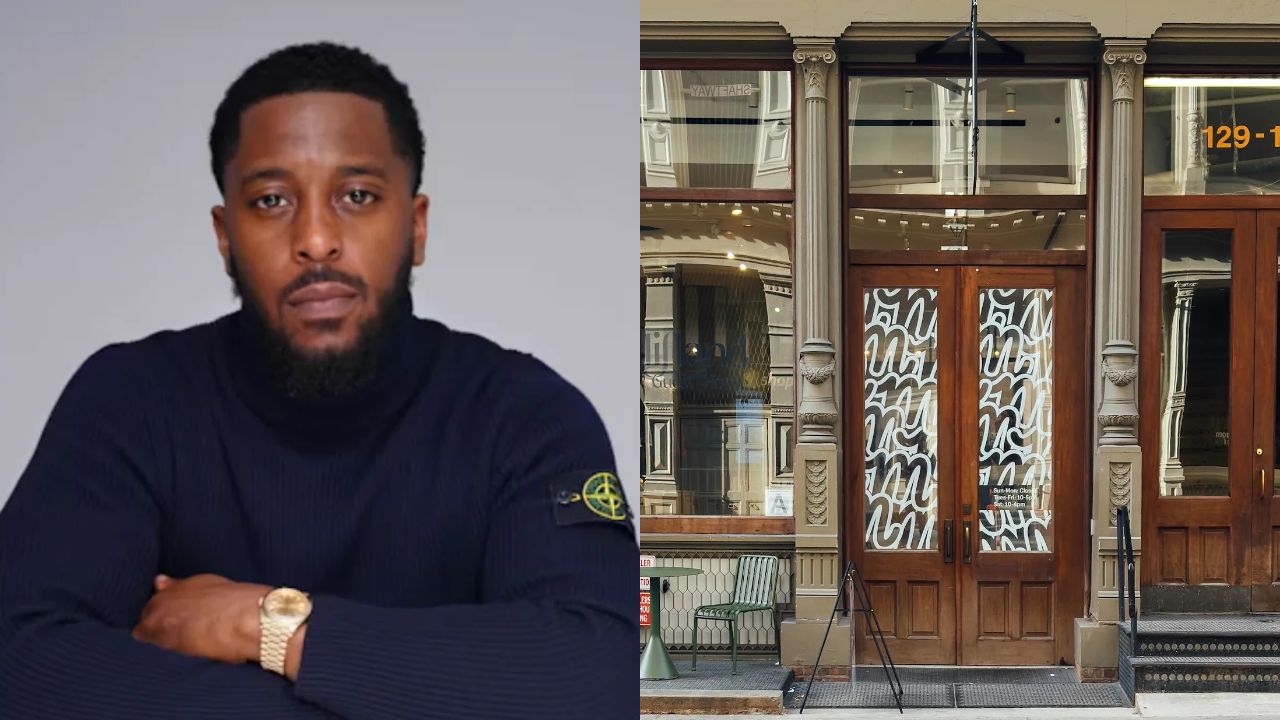
Tobi Egberongbe has built Mifland into one of the fastest-growing independent names in fashion, and he’s done it without giving up ownership.
The Nigerian-American designer launched the brand as a handcrafted leather goods label before expanding into apparel and footwear. Since the pandemic, Mifland has grown 340%, followed by 10% to 50% growth year over year, according to the company. The brand has sold more than 200,000 products to over 61,000 customers, who buy an average of 2.2 items per order.
Mifland has also picked up high-profile fans along the way, including LeBron James, Jalen Hurts, Tessa Thompson and Swizz Beatz, all of whom have worn the brand organically. It has collaborated with Nike and the Atlanta Falcons, and most recently partnered with Sperry on reworked versions of the Billfish and 3-Eye Mini Lug. After sold-out pop-ups in New York and Atlanta, the company is now planning to open its first permanent store in New York.
AfroTech spoke with Egberongbe about funding growth independently, choosing partnerships that make financial sense and why physical retail is the brand’s next move.
This interview has been edited for length and clarity.
Mifland has grown a lot since the pandemic while staying independently owned. How have you funded that growth, and what has staying independent allowed you to do with the brand?
We’ve always been intentional about how we grow Mifland. For us, it’s never been about scaling as quickly as possible just for the sake of growth. It’s about building something sustainable that has longevity.
Being independently owned has allowed us to make decisions based on what’s best for the brand rather than outside expectations. We can be thoughtful about the products we introduce, the partnerships we pursue and how we invest in the business.
We’ve taken a disciplined approach to growth, focusing on creating products people genuinely want, building strong customer relationships and being strategic about where we allocate resources. Independence gives us the freedom to experiment creatively while staying true to our vision. There’s something powerful about being able to build a brand on your own terms, especially as a Black entrepreneur in an industry where access to capital and opportunities isn’t always equal.
Ultimately, we’re not just building a fashion brand. We’re building a business that can stand the test of time through high-quality products that our customers love.
Mifland customers not only keep coming back but tend to buy more than one piece at a time, averaging more than two items per order. What do you think drives that loyalty, and what have you done to build it?
I think it starts with the product. You can have great marketing and visibility, but if the quality isn’t there, people aren’t going to keep coming back. We’ve always put a lot of emphasis on craftsmanship, design and creating pieces that feel special but are also functional enough to become part of someone’s everyday wardrobe.
Our customers appreciate that balance. They’re investing in something they can wear for years, not just something that’s trending for a season.
We’ve also been intentional about building a relationship with our community. We listen to our customers, pay attention to what resonates and make sure the experience of owning a Mifland piece lives up to their expectations.
When someone purchases one piece and comes back for another, that’s one of the strongest indicators that we’re doing something right. And when customers are purchasing multiple pieces at once, it tells us they’re not just buying into a product; they’re buying into the brand and trusting what we’re creating.
That kind of loyalty isn’t something you can manufacture overnight. You have to earn it consistently.
Collaborations with Nike, the Atlanta Falcons and Sperry put Mifland in front of new audiences. Beyond visibility, how do you decide whether a partnership makes financial sense, and what did the Sperry deal do for the business?
For us, a successful collaboration has to make sense creatively and commercially. Visibility is great, but visibility alone doesn’t necessarily translate into a stronger business.
Whenever we’re considering a partnership, we’re thinking about whether there’s an authentic connection between the brands, whether we’re reaching a consumer who might not have discovered Mifland otherwise and whether the opportunity creates value beyond the initial launch.
We’ve been fortunate to work with brands like Nike, the Atlanta Falcons and Sperry, but we’re selective because every partnership represents our name and what we’ve spent years building.
The Sperry collaboration was an opportunity to introduce Mifland’s design perspective to a different audience while demonstrating how our creative identity could translate into another product category. It also gave us experience working within the infrastructure of an established global footwear brand.
Those experiences are valuable because they help us understand how to approach future opportunities, expand our capabilities and create new business possibilities without compromising what makes Mifland unique.
For independent brands, I think the biggest lesson is that not every opportunity is the right opportunity. You have to understand what you’re gaining beyond the logo placement and whether that value supports the long-term health of your business.
You’re planning to open your first permanent store in New York after sold-out pop-ups in New York and Atlanta. What did the pop-ups show you about whether a permanent store would pay off, and how does physical retail fit into a business that has largely been direct-to-consumer?
The pop-ups were important because they gave us an opportunity to connect with our customers in a way that you can’t fully replicate online.
As a direct-to-consumer brand, we understand the value of digital, but there’s something different about someone being able to walk into a space, touch the materials, experience the craftsmanship and understand the story behind what we’re creating.
Seeing the response in New York and Atlanta reinforced that there was demand for that physical experience. The sold-out events were encouraging, but just as important was seeing how people interacted with the products and the brand in person.
Opening a permanent store is a natural next step, but we’re approaching it with the same discipline we’ve applied to the rest of the business. Physical retail isn’t just about having a storefront. It’s about creating an environment that strengthens our relationship with customers, introduces the brand to new audiences and becomes an extension of the Mifland experience.
We see retail and e-commerce working together rather than competing with one another. Our digital business gives us reach, while a physical space allows us to build deeper connections and create a stronger sense of community around the brand.
For us, the store is about more than transactions. It’s about creating a destination that represents who we are and where we’re going.
Athletes and celebrities like LeBron James and Jalen Hurts have worn Mifland without being paid to. How do you turn that kind of organic visibility into sales, and what advice would you give other independent founders trying to scale without big marketing budgets?
It’s always exciting to see someone like LeBron James or Jalen Hurts wearing Mifland, especially when it’s organic. There’s a level of validation that comes from someone choosing your product simply because they genuinely like it.
But I think the key is understanding that those moments are opportunities, not the entire strategy. Someone wearing your product can introduce you to thousands or even millions of people, but what happens after that is what really matters.
You have to make sure the product, the customer experience and the brand itself are strong enough to turn that initial interest into a lasting relationship.
We’ve always focused on creating pieces that speak for themselves. When people connect with the design and quality, they naturally want to share it, whether they’re professional athletes, entertainers or everyday customers.
My advice to other independent founders would be to focus on building something people genuinely believe in before spending heavily on getting attention. You don’t necessarily need the biggest marketing budget to create cultural relevance. You need a clear point of view, consistency and a product that delivers on its promise.
And when those big moments happen, be prepared to capitalize on them. Make it easy for people to discover your brand, understand what makes it different and become customers.
Ultimately, the goal shouldn’t just be to get someone influential to wear your product. It should be to build a brand that people want to be associated with, whether there’s a camera around or not.
