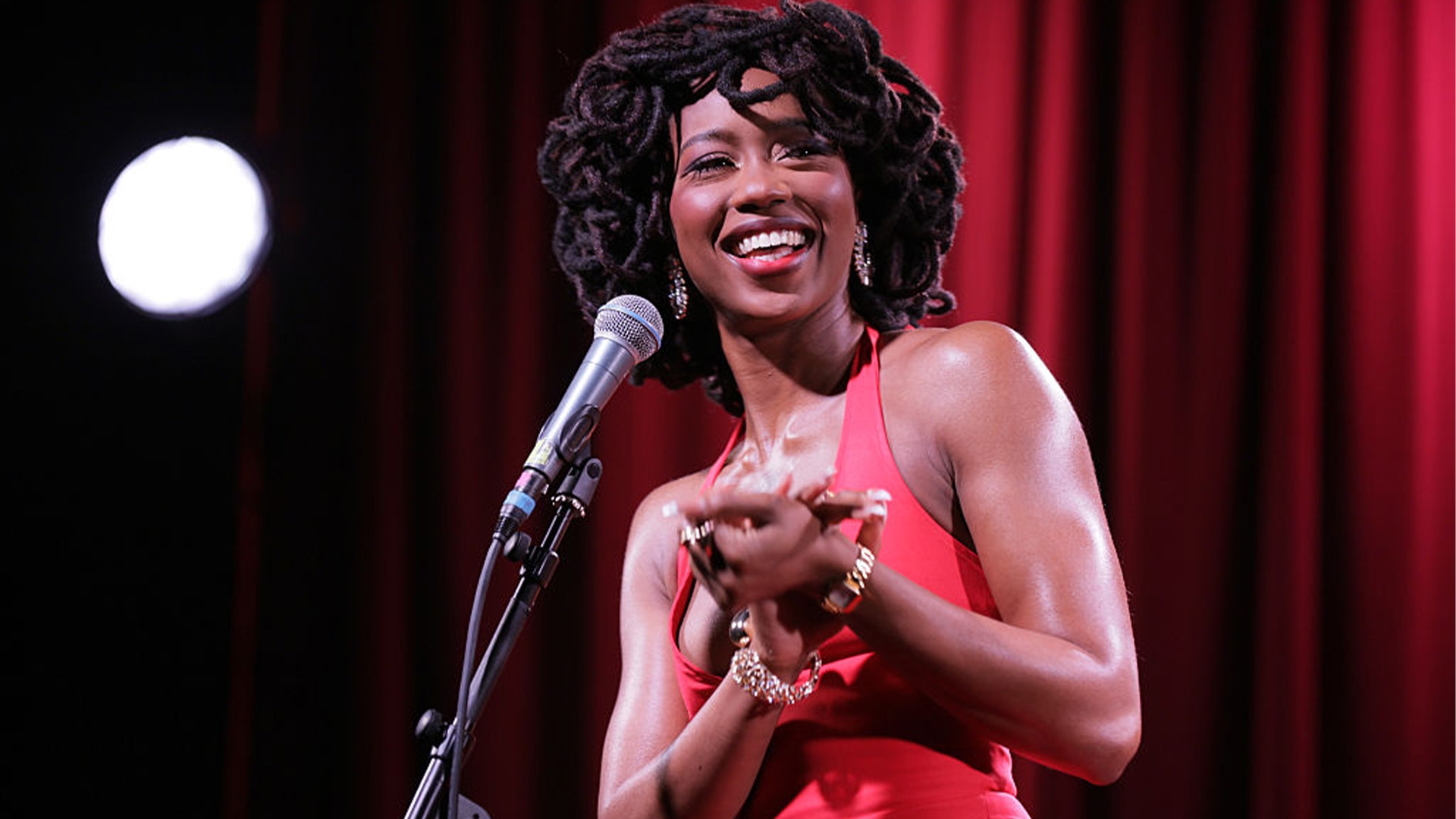
Lynae Vanee doesn’t want people to watch, like, and share her content for its own sake. She wants the information to go somewhere.
Since launching her social media series “Parking Lot Pimpin’” during the COVID-19 pandemic, Vanee has used her platform to connect political information, history, and lived experience. As her work has expanded into live events and REVOLT’s “The People’s Brief,” she has remained focused on what happens after people get the information.
How Social Media Moves People From Information To Action
“Parking Lot Pimpin’” emerged during a period when political and social information was moving rapidly across social media. Vanee saw an opportunity to help Black audiences understand not only what was happening but how those events connected to a longer history.
“The design for that was to equip people with vocabulary and language and receipts to substantiate sort of the things they had been feeling for some time,” she told AFROTECH™ in an interview.
Vanee wanted audiences to develop what she described as “pattern recognition,” using history to better understand experiences unfolding in political, professional, and social spaces. Social media gave her a channel to make those connections accessible, but the impact has increasingly extended beyond the platforms themselves.
“I think in Black communities, what I’m seeing is creators being able to take their audiences and bring them offline into physical spaces,” she said. “…How we’re using these spaces really is encouraging people to do something different, to be something different, not just be inspired and go home and keep inspiration to themselves, but to act.”
Political Access Still Requires Depth And Context
As Vanee has expanded into long-form writing, including Substack, she has encountered the tension between the complexity of political and social issues and a digital culture accustomed to quick information.
That reality has not convinced her to abandon complexity. Instead, she encourages people to read, write, and actively educate themselves, particularly when understanding an issue requires history and nuance.
“I’m going to keep advocating that people advocate for themselves by educating themselves,” she said. “…You have to get in depth, but people aren’t in a space to receive depth.”
Lynae Vanee Is Rethinking Political Conversations
Reflecting on her latest chapter, Vanee said she first met with REVOLT around 2022. The meeting lasted about 10 minutes, and she didn’t hear from the company again for nearly three years. Then, in early 2025, her manager called saying they wanted to give her a show.
“The People’s Brief” gives the Spelman College alum another avenue to approach political access, this time through longer conversations. The current season focuses on the road to the midterm elections, with Vanee speaking with elected officials about what is at stake, the issues affecting people, and what voters should be watching. That has included a recent conversation with New York City Mayor Zohran Mamdani, who was sworn in as the city’s 112th mayor on Jan. 1, 2026.
For Vanee, however, access to elected officials is only useful if those conversations get beyond the messaging audiences have heard before. Instead, she wants elected officials to answer questions rooted in what people actually want to know.
“When they come to my platform, I’m not really interested in your flowery language. I’m not interested in your campaign points,” she said. “In order to trust elected officials, people need to know how you feel about the things that matter to them.”
Technology Must Come With Greater Responsibility
Even as technology helped Vanee build an audience and create new avenues for political education, she is skeptical of treating technological advancement as progress on its own.
“Technology is such a double-edged sword because the onus is on people to do the right thing with it,” she told AFROTECH™.
That skepticism extends to artificial intelligence. As a writer, Vanee said she sees value in technology that helps people sharpen skills they already possess, but she has become critical when those tools begin doing the creative or intellectual work for them.
“If AI tools can assist people in being more skilled at what they already do, sure, fine,” she said. “…I don’t think AI needs to be added to every piece of whatever you got.”
That responsibility also applies to creators using technology to build their own influence. Her advice for those covering politics, culture, and social issues is direct.
“We can’t get wrapped up in the narrative that individual ascension is the way to beat the game,” she said. “We are a collectivist people. We have to remember that in everything we do.”
From “Parking Lot Pimpin’” to conversations with elected officials on “The People’s Brief,” Vanee has used technology to create new routes for political information to reach people and communities. But getting information onto someone’s screen was never the final destination.