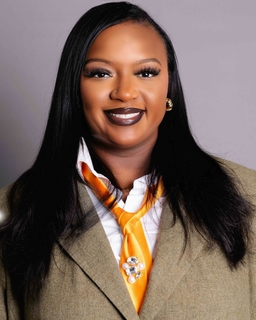
Cheryl Finley’s mission to diversify the arts continues as the winner of the High Museum of Art’s 2026 David C. Driskell Prize.
Through a partnership with LVMH in Paris, a group of Spelman students traveled to the city for an immersive dive into luxury and fashion leadership, opening doors that a typical museum internship for art students could not.
Students explored the foundational role of storytelling and curatorial practice in the luxury industry’s evolution, highlighting its deep ties to the visual arts and design.
“This partnership opened doors to an exclusive industry for which storytelling, curatorial practice, as well as the history of art and design are essential, indeed, not solely the domain of the museum,” said Finley in a recent interview with AfroTech Culture.
Dispelling myths around art history, curatorial practice and the luxury business
Art history, curation and luxury are historically exclusive industries; however, throughout her work, Finley has worked to break down those barriers to make space for students who look like her.
“One of the biggest structural barriers to entry into the art history, curatorial practice and the luxury business is access,” Finley explained. “Access to professional development, access to funding (scholarships), access to mentorship, and access to pipelines for job opportunities. When I look at leaders at the top of their game in these fields, from Pharrell, to Thelma Golden to Kellie Jones, I not only teach them as examples of achievement, but I make every effort to provide my students access to these luminaries and their colleagues and networks, so that they can begin to chart their way in these industries.”
“That access may come through invited distinguished lectures, academic field study, paid internships, or special topics courses where key figures are featured as guest speakers in the classroom,” she continued.
On her influence beyond academia
According to the High Museum director, Finley’s influence extends “well beyond academia,” so we asked what career path or role her former students landed in did not exist when she first started teaching.
Finley was able to name three.
Firstly, the Roy Lichtenstein Post-Baccalaureate Fellowship in Museum Professions, which is a two-year paid opportunity thanks to a generous gift from the Roy Lichtenstein Foundation, where two students are placed in a major museum for the first year and exposed to various museum professions, followed by a second year where the fellows are placed at the museums on campus, the Spelman Museum and the Clark Atlanta University Art Museum, to further their training, sharing the skills and knowledge obtained from their first year at the major museum.
Second, the AUC Art Collective Paid Summer Internship was created in response to the lack of paid internships in the field. To date, the program has placed more than 200 paid interns across North America, Europe and Africa.
Finally, she has noticed an interest in the art business from her students, and Finley recalls two standout graduates who secured jobs at the top auction houses in collecting areas that did not exist when she began teaching.
Now, with the $50,000 Driskell Prize, an unrestricted award, Finley aims to use the recognition and visibility that comes with the accolade to bring funding, patrons and partners to the Collective to enable the program’s long-term sustainability.
“Further, it is my hope that this nationally recognized award will plant the seed of a much-needed endowment fund for the Collective in the immediate future,” she said.